
For years, the lowest apron feeder price could win a tender before the technical conversation had properly started. A procurement team compared quotations, saw similar capacity figures, and selected the cheapest pan feeder. The logic appeared simple: steel is steel, a chain is a chain, and the feeder only moves material from a hopper to a crusher.
In 2026, that logic is failing more often. Mining and coal-handling operations are placing more value on predictable production, safer maintenance, and evidence they can use to plan shutdowns. The apron feeder is no longer viewed as a minor line item at the front of the circuit. It is recognised as a production gatekeeper. If it cannot extract material consistently, the crusher, screen, conveyor, and every process downstream lose time.
That is why smart mining buyers are not simply paying more for a heavy-duty apron feeder. They are buying fewer surprises. For sourcing specialists, purchasing managers, and buyer assistants, the shift is a useful warning: an attractive initial quotation can be the most expensive number in the purchase file.
The Low Price Is a Signal, Not a Saving
A cheap apron feeder is not automatically a poor machine. A manufacturer may have efficient production, a short supply chain, or a genuinely simpler duty. The concern begins when the price gap cannot be explained by a clear difference in scope, materials, capacity, or commercial terms.
In those cases, the missing cost is usually hiding inside the design. It may be thinner pans, less reinforcement below the loading zone, lower-grade wear material, undersized chain components, a lightly built frame, or a drive selected for ordinary running but not for loaded starts. It may also be missing in less visible areas: guards that take too long to remove, no practical inspection access, no confirmed spare-parts list, or a supplier that cannot support the equipment once it reaches the site.
An apron feeder does not operate in a clean laboratory. It receives impact, abrasive fines, variable lump size, wet material, off-centre loading, and occasional overloads. A quotation that treats these conditions as optional will look competitive. It will not remain competitive when the operation has to stop to repair a pan, align a chain, replace a roller, or clear persistent spillage.
The Real Cost Begins After Commissioning
The purchase order captures the capital cost. The operating team inherits the total cost of ownership. That cost includes planned maintenance labour, wear parts, emergency freight, lost output during an unplanned stop, cleanup around the feeder, and the management time spent chasing a remote supplier for drawings or replacement parts.
Consider a simple scenario. Two mining apron feeders both meet a stated capacity on paper. The lower-priced unit needs repeated attention around the discharge and return area, while the better-specified unit has more durable components, accessible inspection points, and defined spare-part support. The first option may save money on day one. But if an avoidable failure delays crusher feed during a high-value production window, the original purchase saving can disappear rapidly.
This is not an argument for over-specification. It is an argument for purchasing the right level of durability for the actual duty. The buyer should ask how the machine handles full-load starting torque, impact at the receiving end, fines containment, chain and roller wear, and the weight of material sitting on the feeder. Those answers reveal more than a headline capacity number ever will.
Cheap Components Create Expensive Interfaces
Many alleged feeder failures begin at interfaces: excessive drop height, off-centre loading, underdesigned supports, or a drive that cannot overcome a full bin. Without a system-level review, pans, chains, rollers, and bearings absorb the penalty.
This matters to procurement because a low quotation can quietly exclude the engineering needed to prevent these problems. Buyers should confirm the design basis before comparing suppliers: material bulk density, maximum lump size, moisture and clay content, operating capacity and surge capacity, hopper geometry, expected drop height, operating hours, and ambient conditions. For coal, ore, limestone, clinker, and other bulk solids, the details change the correct selection.
A reputable apron feeder manufacturer will ask for this information and explain its assumptions. A supplier that confirms every requirement instantly without questions may be pricing a generic machine, not a feeder engineered for the application.
Why the Buying Standard Has Changed in 2026
Mining teams now have better visibility into the cost of small recurring interruptions. Production data, maintenance records, and condition-monitoring practices make it easier to see which assets generate reactive work and which assets support a controlled maintenance plan. That is raising the standard for even conventional equipment such as apron feeders.
Buyers are also under pressure to make assets safer and easier to service. A feeder that requires awkward access, heavy manual handling, or frequent work near moving components creates a risk that is not shown on the commercial quotation. By contrast, practical guards, inspection access, wear monitoring options, and clear maintenance procedures help the site plan work safely.
Smart mining is not fitting sensors to every machine. It is selecting equipment that delivers repeatable mechanical performance and usable maintenance information. Monitoring supports—not disguises—a sound mechanical foundation.
A Procurement Playbook for Comparing Apron Feeders
When reviewing offers, move the discussion from “Which feeder costs less?” to “Which feeder has the lowest defensible life-cycle risk?” A practical comparison should include the following points.
- Define the duty in writing. Put material characteristics, capacity range, maximum lump size, hopper arrangement, drop height, duty cycle, and start-up condition into the enquiry. Require each supplier to state any deviation.
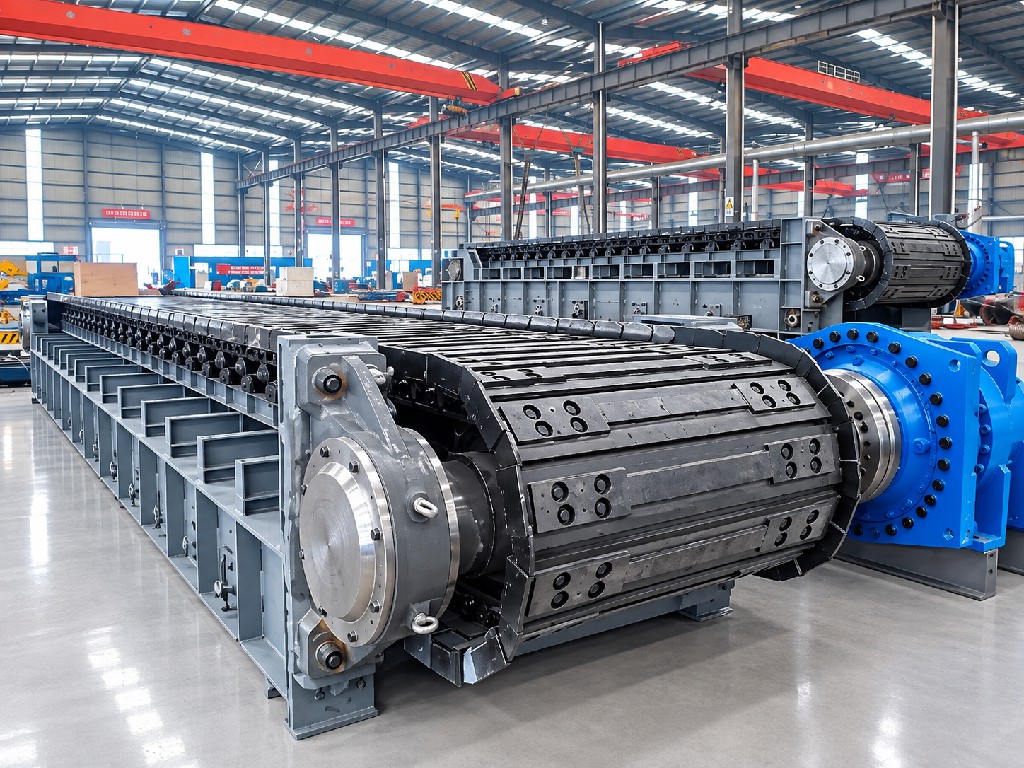
- Compare the load-bearing design. Ask for pan thickness and material, overlap and sealing, chain and roller type, frame construction, impact support, shaft and bearing arrangement, drive rating, and start-up method. Compare drawings and data sheets, not marketing photos.
- Review maintainability before delivery. Confirm access to the drive, return rollers, pans, chains, head chute, and take-up area. Ask which components can be changed in place, what lifting points are supplied, and what clearance the site must provide.
- Price the first years of ownership. Request commissioning and operating spares, wear-part life assumptions, lead times, warranty terms, and service options. A low base price with unavailable apron feeder spare parts is not a low-cost solution.
- Test the supplier’s application knowledge. Ask for a comparable reference by material and duty, the expected inspection schedule, and the response process for a technical issue. The best answer is specific and documented, not a vague promise of “high quality.”
- Make acceptance measurable. Agree on capacity, direction of rotation, control interfaces, safety devices, documentation, factory inspection points, and commissioning responsibilities. If monitoring or wear detection is included, define the signal, alarm logic, and who will use the data.
Questions That Expose a Weak Apron Feeder Offer
Before issuing a purchase order, ask the supplier to answer these questions in writing:
- What design loads have been used for empty, operating, and fully loaded start-up conditions?
- How are impact, abrasive wear, and fines leakage managed at the loading zone and skirt area?
- What are the specified materials and dimensions for pans, chains, rollers, sprockets, shafts, and the frame?
- Which critical parts are stocked, where are they stocked, and what are their normal lead times?
- What inspection access, guarding, lifting features, and maintenance clearances are required?
- What site data would cause the proposed apron feeder design to change?
These questions do not make procurement slower. They reduce the chance that an apparently complete offer becomes a stream of change orders, workarounds, and urgent spare-part requests after installation.
Buy Production Confidence, Not Just a Machine
The right apron feeder purchase is rarely the cheapest quotation and rarely the most elaborate specification. It is the feeder whose duty, mechanical design, maintainability, support plan, and acceptance criteria all match the plant’s real operating conditions.
In 2026, smart mining buyers are moving away from cheap apron feeders because they understand the commercial truth behind a simple mechanical asset: reliable extraction protects the entire process. A well-engineered mining apron feeder turns a purchasing decision into production confidence. A poor one turns a small capital saving into an operating problem that keeps returning.
FAQ
Compare duty specification, pan and chain construction, drive capacity, impact support, maintenance access, warranty, drawings, spares, and lead times for apron feeder spare parts. The lowest quote is meaningful only when suppliers offer the same scope and design duty.
Provide the apron feeder manufacturer with bulk density, maximum lump size, abrasive characteristics, moisture, throughput range, hopper geometry, drop height, and start-up condition. The supplier should then show how the pans, chains, rollers, frame, impact supports, and drive are sized for that duty.
Safe, practical access shortens inspections and planned repairs. It also reduces the chance that teams defer a necessary check because it is difficult to reach rollers, drive components, chains, or the discharge area. Good access supports safer work and more predictable uptime.
Yes. A coal apron feeder can incorporate suitable monitoring for wear or operating condition when the application and control system justify it. Monitoring should support regular inspections and planned maintenance; it should not replace a sound mechanical design, correct installation, or a reliable spare-parts strategy.