

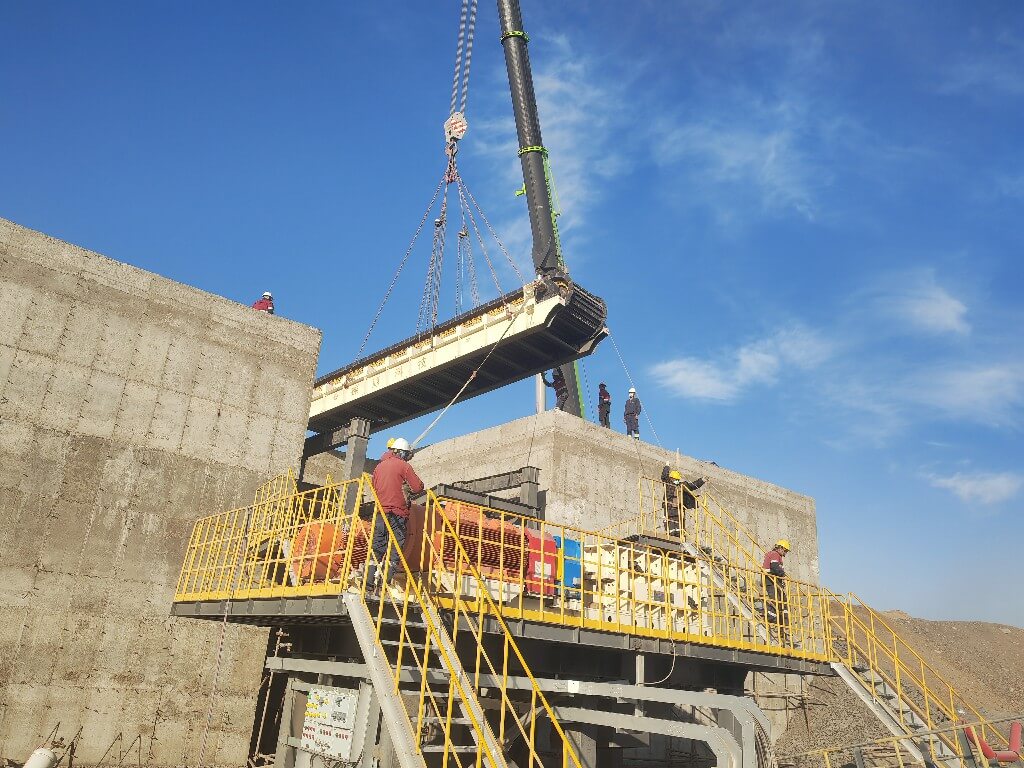
A primary crusher may be one of the largest machines in a mining plant, but its performance does not depend on the crusher alone. Before every tonne of ROM ore reaches the crushing chamber, it must first pass through the feeding system.
This is where an apron feeder becomes critical.
A properly selected apron feeder provides a controlled and continuous flow of material from the receiving hopper to the primary crusher. More importantly, it is designed to handle the impact, lump size, abrasiveness and variability that are typical of mine-run material.
When the feeder is correctly matched to the crusher and material characteristics, the benefits extend beyond feeding. More stable crusher loading, fewer interruptions, controlled wear and better equipment utilization can all contribute to lower operating costs and more predictable production.
Why Primary Crusher Performance Starts With the Feeder
Primary crushing is often exposed to the most unpredictable material conditions in the plant. Run-of-mine ore may contain oversized rocks, fines, moisture and highly abrasive particles, while truck dumping can introduce sudden variations in feed volume.
If the crusher receives material unevenly, its installed capacity may not translate into actual production.
An apron feeder for primary crusher applications creates a controlled interface between the hopper and crusher. Instead of allowing material to enter according to the irregular pattern of truck loading or gravity discharge, the feeder extracts material at a controlled rate.
This helps maintain a more consistent feed to the crusher.
The principle is simple:
Stable feeding → stable crusher loading → more predictable crushing → better plant utilization.
The feeder does not increase the crusher's rated capacity. It helps the plant make better use of the capacity already installed.
Handling the Reality of ROM Ore
Mining conditions are very different from conventional bulk-material handling.
ROM ore can be large, heavy, sharp and abrasive. Some materials are also wet or sticky, making reliable feeding more difficult. A feeder installed directly beneath a large hopper must withstand both continuous loading and occasional high-impact events.
This is one reason heavy-duty apron feeders are widely used in demanding mining applications.
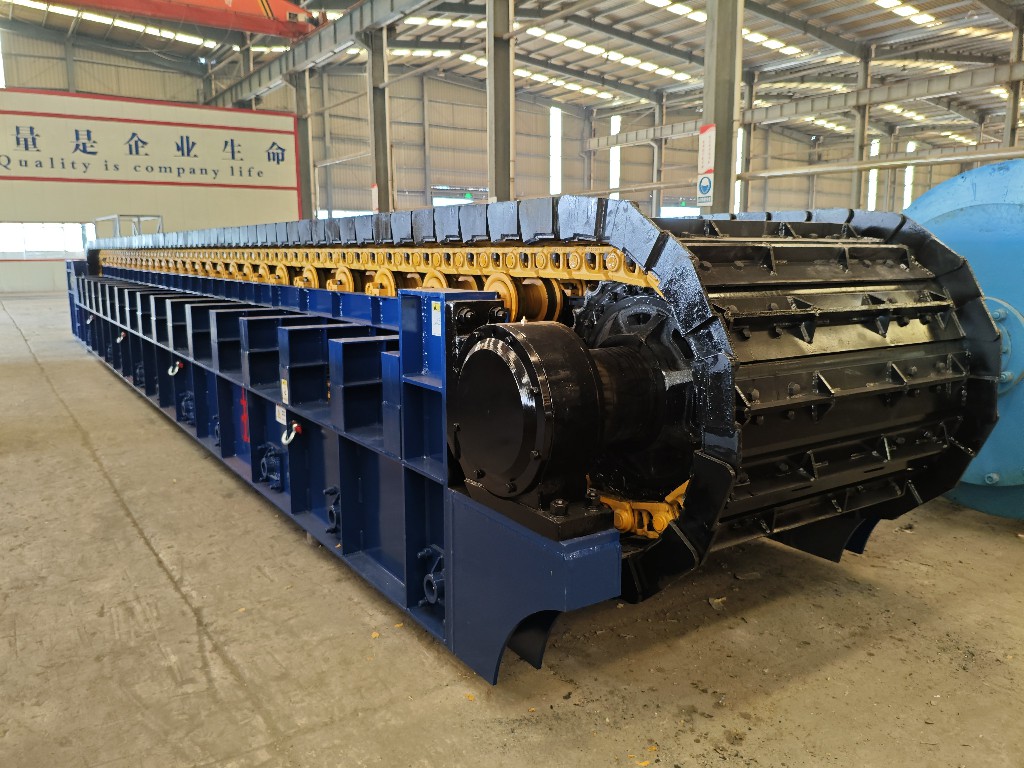
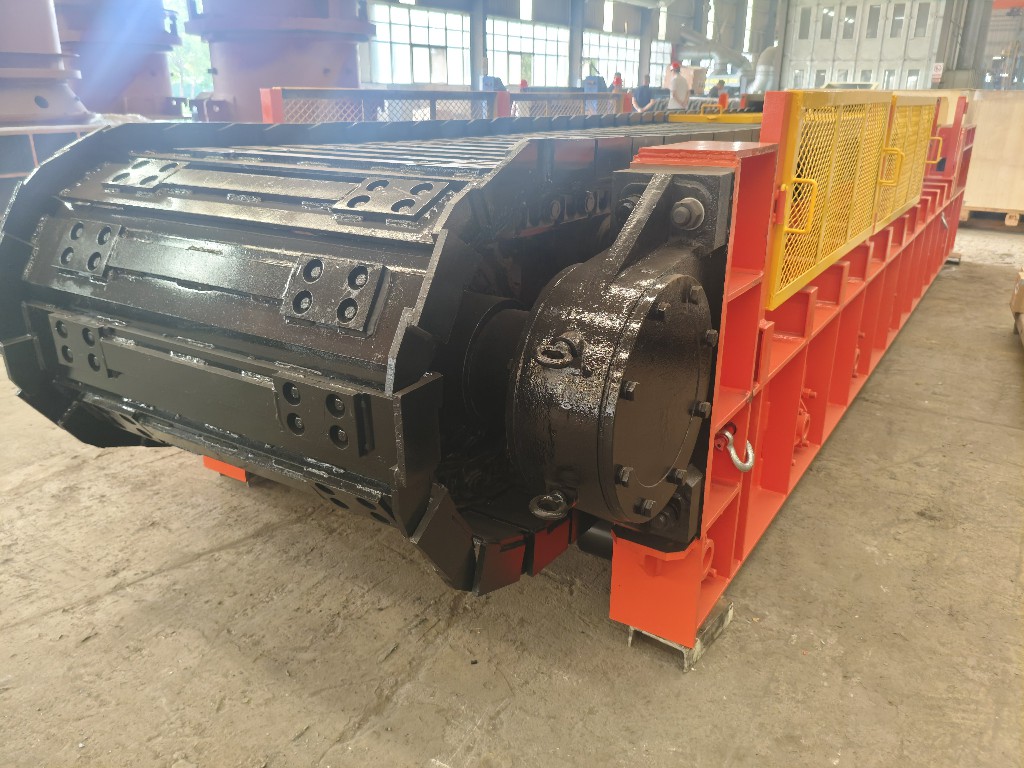
Steel pans supported by heavy-duty chains and rollers form a robust conveying surface. The design allows large material to be received and transported while maintaining controlled discharge to the crusher.
For a primary crushing station, this durability matters because a failure at the feeder can stop the entire downstream process.
The economic consequence of such a failure is not limited to the cost of replacing a component. It may also include lost crusher production, idle conveyors, additional labor and an unplanned maintenance window.
The Right Apron Feeder Is About More Than Capacity
Capacity is usually the first number discussed when selecting an apron feeder, but it should not be the only one.
A feeder rated for a certain tonnes-per-hour figure may still be unsuitable if its dimensions, drive system or structural design do not match the actual application.
Key selection factors include:
- Required normal and peak capacity
- Maximum feed lump size
- Material bulk density
- Moisture and stickiness
- Material abrasiveness
- Hopper opening and geometry
- Feeder width and length
- Installation angle
- Required operating speed
- Drive torque and starting conditions
- Primary crusher capacity
- Expected operating hours
Maximum lump size deserves particular attention. A feeder may handle the required average tonnes per hour but still encounter problems if oversized rocks exceed the practical design limits of the pans, hopper or transfer arrangement.
Likewise, bulk density affects the actual mass flow. Two materials occupying the same volume can produce significantly different tonnes-per-hour requirements.
For this reason, experienced apron feeder suppliers normally need complete material and operating data before finalizing the equipment design.
Feed Rate Control Can Protect the Crushing Circuit
The relationship between the feeder and crusher is not simply about moving material.
It is about controlling how much material reaches the crusher and how consistently it arrives.
A variable-speed or otherwise controllable apron feeder can adjust material flow according to production requirements. This becomes particularly useful when upstream and downstream equipment have different operating characteristics.
For example, if the crusher is approaching its practical operating limit, reducing feeder speed can prevent unnecessary surges. If the crusher is running below the desired production rate, feeder speed can be increased within the design limits of the system.
This creates a more responsive crushing circuit.
In larger plants, the feeder may also work with a grizzly or scalping section to remove suitable fines before material enters the primary crusher. This can reduce the amount of material that needs to be processed through the crushing chamber and may help improve crusher utilization.
The exact arrangement depends on the ore characteristics and plant design, but the principle remains the same: feed the crusher according to what the crushing circuit can actually process.
Why Feeder Speed Should Not Be Chosen in Isolation
More speed does not automatically mean more profit.
Increasing apron feeder speed can increase material flow, but it can also influence wear, energy consumption and material interaction with the feeder surface.
The correct speed depends on feeder dimensions, material properties, required capacity and the relationship between the feeder and downstream equipment.
In many mining applications, it is more useful to think in terms of controlled tonnes per hour rather than maximum possible feeder speed.
A correctly sized feeder operating within a suitable speed range can provide a more stable production profile than an undersized feeder running continuously at its upper limit.
That distinction becomes important when equipment is expected to operate thousands of hours each year.
Maintenance Costs Begin With Equipment Selection
The purchase price of an apron feeder is only part of its cost.
Mining operators should consider the expected lifecycle of wear components such as pans, chains, sprockets, rollers and bearings. Accessibility for inspection and replacement is also important.
A practical feeder design should make routine maintenance manageable.
If technicians need excessive time to inspect or replace a wear component, even a relatively inexpensive part can become costly because of extended downtime.
This is why equipment selection should consider:
Component life + maintenance access + spare-parts availability + downtime risk.
For heavy-duty mining equipment, robust construction is valuable, but maintainability is equally important. The best design is not simply the one that survives harsh conditions. It is one that can be inspected, maintained and repaired efficiently when required.
From Throughput to Cost per Tonne
The financial value of an apron feeder becomes clearer when viewed across the entire plant.
Imagine a crushing system that has sufficient crusher and conveyor capacity but frequently experiences unstable feeding. The plant may have the theoretical ability to produce more, yet actual production remains below the target.
In this situation, replacing or optimizing the crusher alone may not solve the problem.
Improving the feeding system can help unlock capacity that already exists elsewhere in the circuit.
The potential benefits include:
- More consistent crusher utilization
- Reduced feed surges
- Better coordination between equipment
- More predictable wear
- Fewer interruptions caused by feeding problems
- Improved production planning
- Lower maintenance-related losses
The result is not necessarily a dramatic reduction in the feeder's own operating cost.
The greater value may come from reducing the cost of operating the entire crushing circuit.
For high-volume mining operations, even a relatively small improvement in utilization can represent a significant amount of additional productive tonnes over a year.
How to Select the Right Apron Feeder for Your Plant
Before approaching a manufacturer, prepare the operating information that defines the real duty.
At a minimum, provide:
Material: ore type, abrasiveness, moisture and bulk density.
Feed size: average and maximum lump size.
Capacity: normal and peak tonnes per hour.
Hopper: dimensions, opening size and material discharge conditions.
Crusher: model or required capacity and feed characteristics.
Installation: feeder length, width, inclination and available space.
Operation: working hours, expected duty cycle and control requirements.
A professional apron feeder manufacturer can then evaluate the feeder dimensions, pan configuration, chain system, roller arrangement and drive requirements as one integrated design.
This approach is much more reliable than selecting equipment from capacity alone.
The Feeder Is a Production Asset, Not Just a Conveyor
The role of an apron feeder is easy to underestimate because it sits between the hopper and the primary crusher.
But in a large mining operation, that position makes it strategically important.
It receives some of the harshest material in the plant, controls the feed entering the primary crushing stage and can influence how consistently the rest of the circuit operates.
The right apron feeder therefore contributes value in several ways: controlled material flow, heavy-duty handling, equipment protection, predictable maintenance and improved utilization of downstream equipment.
The objective is not simply to move ore from Point A to Point B.
It is to create a feeding system that allows the crushing plant to operate closer to its practical production target, with fewer avoidable interruptions and a more predictable cost per tonne.
That is where the journey from primary crusher to profit really begins.
Frequently Asked Questions
An apron feeder extracts ROM ore from a hopper or receiving area and delivers it to the primary crusher at a controlled rate. Its heavy-duty construction allows it to handle large, abrasive and high-impact material.
The required apron feeder capacity should be based on normal and peak feed rates, material bulk density, maximum lump size, hopper conditions and the capacity of the downstream primary crusher.
A heavy-duty apron feeder uses robust pans, chains, rollers and structural components designed for severe loading conditions. It is suitable for large, abrasive and difficult-to-handle material commonly found in mining applications.
Yes. A correctly designed apron feeder can provide a more stable material flow and help maintain consistent crusher loading. When combined with appropriate process control, this can improve overall circuit utilization.
An apron feeder manufacturer typically needs information about material type, bulk density, moisture, abrasiveness, maximum lump size, required capacity, hopper dimensions, feeder installation conditions and the downstream crusher.