

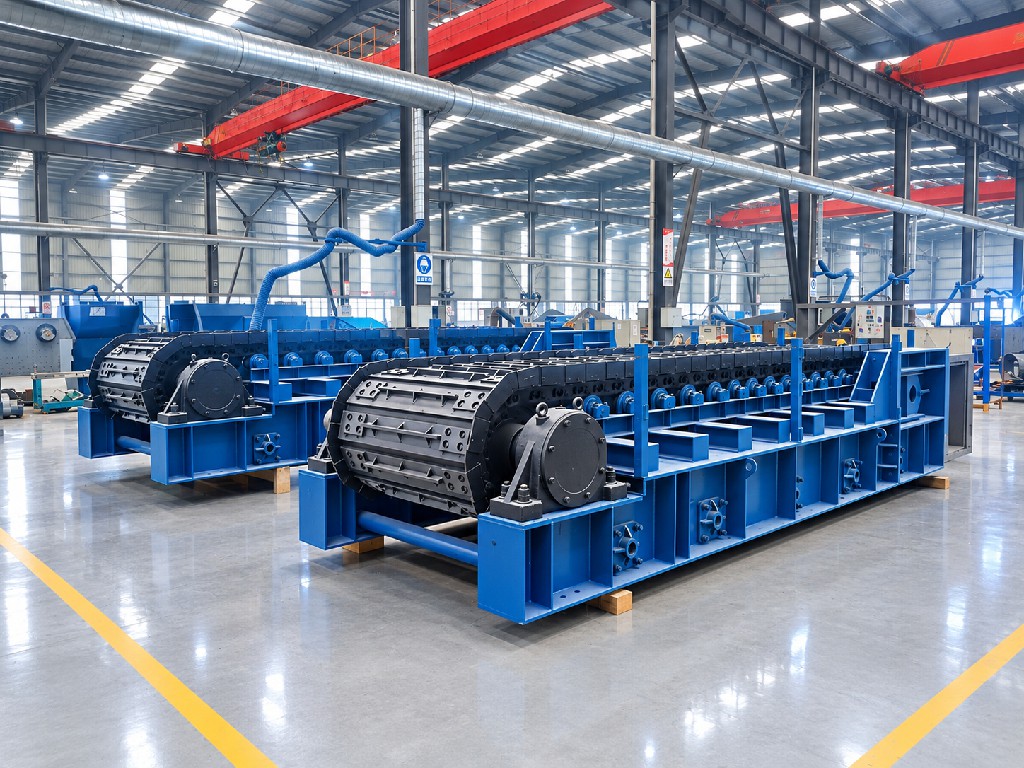
An apron feeder quotation can be twice the price of another quotation that seems to describe the same machine. Both may state “1,000 t/h” and a similar width. Yet one may work steadily beneath a crusher hopper for years, while the other develops pan distortion, chain wear, or gearbox overload in its first difficult season.
The gap does not automatically mean one supplier is overpriced. An apron feeder price is built around real duty—not headline capacity. Ask, “What has each supplier designed, supplied, and accepted responsibility for?”
For mines, coal handling plants, quarries, cement works, and terminals, an apron feeder is often the first controlled link between stored material and the process. If it stops, the downstream plant may stop with it. A serious comparison follows the load path from hopper to drive.
The duty definition sets the foundation
Capacity is only one part of an apron feeder specification. Two feeders rated at the same tonnes per hour can experience completely different forces. A feeder drawing fine, free-flowing coal from a shallow bin is not comparable with a heavy-duty apron feeder extracting wet, abrasive ore containing large lumps from a high hopper.
Before pricing, an experienced apron feeder manufacturer will ask about bulk density, lump size, moisture, abrasiveness, temperature, normal and peak throughput, and operating hours. The hopper geometry, live material height, outlet opening, bridging risk, and possible loading impact are equally important.
The distinction between metering duty and extraction duty matters. Metering regulates a consistent stream. Extraction must overcome full-hopper pressure and may restart under load after an upstream trip. Designing both around the same nominal throughput makes quotations look deceptively similar.
Pan design is not a cosmetic detail
Apron pans carry material, absorb impact, and transfer force to the chain system. Profile, thickness, steel grade, ribbing, overlap, connection, and support pitch all influence service life. A low quote may use thin fabricated pans where the application needs reinforced, wear-resistant pans with a properly designed overlap.
For coarse, sharp, or high-impact material, the pan must resist bending without allowing fines into the undercarriage. Its leading edge must retain material without collecting sticky ore. Cast, fabricated, and alloy-steel pans can all be appropriate; the choice must follow the feed material and loading case. “Heavy duty” in a quotation is not a calculation.
Ask each bidder to state pan material, nominal thickness, pitch, weight per pan, support arrangement, and the assumed maximum lump size. These details make it far easier to see whether the quoted apron feeder price reflects real wear and impact resistance.
Chains, rollers, and sprockets often explain the largest difference
The undercarriage is where a feeder earns—or loses—its reputation. A heavy-duty apron feeder uses chain assemblies, hardened sprockets, and rollers sized for dead weight, material and hopper load, and dynamic starting load. Alignment and lubrication are as important as a catalogue rating.
The lower-priced design may use a lighter chain, fewer rollers, shorter support length, smaller pins and bushes, or less demanding heat treatment. Those choices may suit light service. Under severe duty, they raise bearing pressure and cause pin-and-bush wear, chain elongation, poor tracking, and shutdown work.
Look for a clear statement of chain type, pitch, pin diameter, roller diameter, roller spacing, sprocket material, tooth hardening, and calculated safety factor. Also clarify how chain tension is adjusted and how individual worn components can be replaced. A supplier who can explain the wear path usually understands the application.
The drive package must start and run under real load
Motor power alone does not define a reliable drive. An apron feeder must deliver enough low-speed torque to start, accelerate, and run under its worst credible load. That requires a coordinated motor, gearbox, reduction ratio, couplings, backstop where required, and speed-control method.
Cheaper packages sometimes have little starting-torque margin or select a gearbox from motor power rather than transmitted torque. This can cause overload trips, hot gearboxes, sheared couplings, or an inability to restart a loaded hopper. A variable-frequency drive improves starting and rate adjustment but cannot compensate for an undersized drivetrain.
Compare continuous and starting torque at the drive sprocket, gearbox service factor, motor duty, output speed range, coupling type, overload protection, and electrical enclosure rating. Where material can pack or bridge, request the proposed starting scenario in writing. It is one of the most valuable lines in any technical clarification.
Structure, shafts, and bearings carry hidden loads
The frame supports concentrated loads and must remain aligned through years of vibration. Beams, shafts, bearings, and mounting interfaces must resist bending and torsion without allowing sprockets to run out of alignment.
Price differences appear in plate thickness, stiffener design, shaft diameter, bearing selection, machining, welding, and corrosion protection. A weak frame creates a chain problem; a deflecting shaft creates a sprocket problem.
Request general arrangement drawings, equipment weight, shaft and bearing data, foundation loads, and the assumed hopper interface. If the hopper steelwork is supplied by another contractor, define who is responsible for transferring the live load correctly. This single interface has prevented many expensive disputes.
Scope and controls can make quotations look artificially cheap
One quotation may include a complete operating package; another may cover only the mechanical feeder. The difference can include VFDs, local control, PLC signals, speed feedback, zero-speed switch, safety interfaces, guards, lubrication, spares, commissioning, manuals, packing, and site supervision.
None of these is optional merely because it is absent from a price table. They are either included, excluded, or left ambiguous. In particular, safety guarding and electrical interfaces should be compared against the plant standard and local regulations, not against a generic supplier note.
Delivery terms matter. Freight, export packing, customs, inland transport, field assembly, and warranty response can change landed cost substantially. A factory-gate quote may not be low at site.
A practical way to compare apron feeder quotations
Build a comparison sheet before negotiating the final price. Do not allow suppliers to substitute vague phrases such as “standard duty” or “as per requirement” for measurable data.
| Comparison item | What to request | Why it matters |
|---|---|---|
| Duty | Full material and hopper-load basis | Confirms the machine is designed for extraction, not only throughput. |
| Pans | Grade, thickness, pitch, reinforcement | Determines impact and wear performance. |
| Undercarriage | Chain, pin, roller, sprocket specifications | Reveals the likely maintenance burden. |
| Drive | Starting torque, service factor, controls | Determines loaded-start reliability. |
| Structure | Frame, shaft, bearing, foundation data | Protects alignment and long-term availability. |
| Scope | Controls, guards, spares, service, delivery terms | Establishes the true landed and operating cost. |
Then ask every bidder to identify exclusions, design assumptions, and recommended critical spares. A transparent supplier will welcome this process because it lets a sound design compete on evidence rather than on a misleading first number.
The lowest apron feeder price is not always the lowest cost
Purchase price is visible; downtime is not, until it happens. A failed chain, worn sprocket, cracked pan, or overloaded gearbox can stop production when repair is most difficult. Lost output, labour, access, urgent freight, and disruption may exceed the saving on the original order.
The most expensive proposal is not automatically correct; overspecification adds cost. The goal is a feeder matched to actual material, hopper, operating pattern, maintenance capability, and project risk. A light, clean application may suit a simpler design. For high-impact extraction beneath a primary crusher or stockpile, robustness has measurable value.
Final buying advice
When an apron feeder quote is twice another, neither figure tells the full story. Compare the engineering basis line by line, inspect drawings, and resolve every exclusion before ordering. Ask how the feeder starts under load, where wear occurs, how components are replaced, and who owns each site interface.
The best apron feeder manufacturer turns actual operating conditions into a documented design, transparent scope, and maintainable machine. That is where the apparent price gap becomes a defensible investment decision.
FAQ
Capacity alone does not define apron feeder duty. Material, hopper load, undercarriage, drive torque, controls, scope, delivery, and support change the required machine and supplied value.
Use one duty sheet. Require data for pans, chains, rollers, sprockets, starting torque, service factor, controls, spares, commissioning, and exclusions—not only capacity and motor power.
An apron feeder manufacturer needs material, density, lump size, moisture, abrasiveness, capacity, hopper drawings, material head, hours, starting condition, layout, power supply, controls, and delivery location. Clear inputs produce a comparable design.
An apron feeder variable-frequency drive provides adjustable feed rate and controlled starting. It must accompany—not replace—adequate mechanical torque for the worst operating load.