

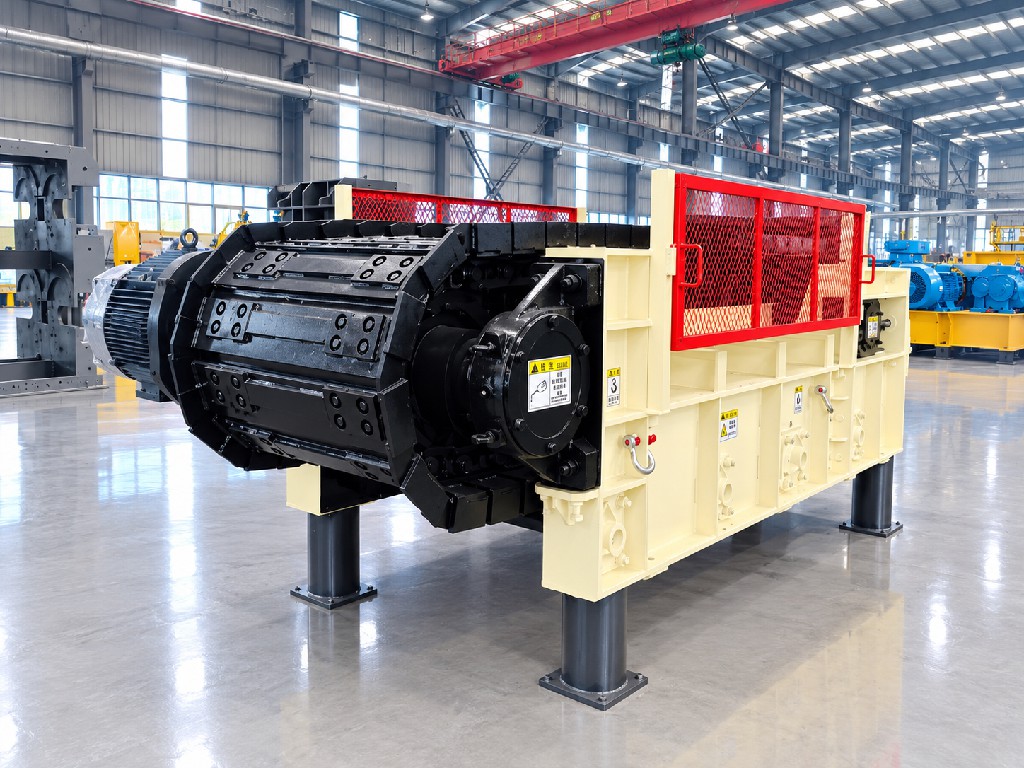
Selecting an apron feeder supplier is not simply a matter of comparing quotations. In mining, coal handling, quarrying, cement, and bulk-material processing, an apron feeder is often positioned at a critical point in the production line: directly beneath a hopper, stockpile, crusher feed bin, or ROM receiving station. If it stops unexpectedly, downstream equipment may be starved of material and the entire operation can lose productive hours.
For a procurement director, the real purchasing decision is therefore not, "Which supplier offers the lowest apron feeder price?" It is, "Which supplier can deliver a feeder that will operate safely, reliably, and economically in our actual material-handling conditions?"
A low initial quotation can become costly when the equipment has insufficient chain strength, undersized drive components, poorly designed pans, difficult maintenance access, or limited spare-parts support. A well-evaluated apron feeder supplier, by contrast, helps reduce operational risk long after the purchase order has been issued.
This guide outlines the essential criteria purchasing teams should use when evaluating an apron feeder manufacturer.
Application Engineering Should Come Before Equipment Price
The first sign of a capable apron feeder supplier is the quality of its technical questions. A supplier should not offer a standard machine based only on capacity in tonnes per hour. A reliable design depends on far more than throughput.
Before proposing an apron feeder, the supplier should request information such as:
- Material type, bulk density, moisture, abrasiveness, and clay content
- Maximum lump size and percentage of oversized material
- Required capacity range, including peak and average feed rate
- Hopper opening dimensions and material burden height
- Installation angle, discharge arrangement, and available space
- Upstream loading method, such as truck dumping, loader feeding, or crusher discharge
- Operating hours, ambient temperature, and site conditions
For example, a feeder handling dry crushed limestone under a controlled hopper will face a very different duty from a heavy-duty apron feeder feeding wet, abrasive ROM coal or hard rock into a primary crusher. The latter application may require stronger chains, reinforced pans, a larger drive, more robust impact zones, and additional sealing or cleaning measures.
A serious supplier will explain its capacity calculation, proposed feeder width, pan speed, chain pull, drive power, and safety factor. Procurement teams should be cautious when a proposal lists only a model number and a nominal capacity without showing how the design matches the application.
Evaluate the Mechanical Design, Not Just the General Arrangement Drawing
An apron feeder is built from interconnected components that must work together under continuous load. The most important items to review include the pans, chains, rollers, sprockets, drive unit, tensioning system, frame, and discharge arrangement.
Ask the supplier to clearly identify the construction material and design philosophy for each major component. Pans should be selected for impact resistance and wear life, particularly where large, sharp, or abrasive material is loaded directly onto the feeder. Chain assemblies should be designed for the calculated working load with an appropriate service factor, not merely sized for normal operating capacity.
The drive system also deserves careful attention. A robust apron feeder drive commonly includes a motor, gearbox, coupling, and drive sprocket arrangement engineered to manage starting torque and fluctuating loads. Where process control requires variable feed rates, a variable-frequency drive may be appropriate. However, it should be selected as part of a complete control strategy, not simply added as an optional item.
Procurement teams should ask the apron feeder manufacturer the following:
- What is the calculated chain pull under full-load starting conditions?
- What safety factor has been used for the chain and drive system?
- Are sprockets supplied as replaceable segments or complete assemblies?
- How are roller bearings protected from dust, moisture, and material spillage?
- What provisions are included to prevent pan misalignment or chain tracking issues?
- Is the feeder frame designed for site loads and support conditions?
The answers reveal whether the supplier is offering an engineered solution or a lightly modified standard product.
Inspect Manufacturing Quality and Traceability
A well-designed apron feeder can still fail prematurely if fabrication and assembly quality are inconsistent. Procurement specialists should assess the supplier's manufacturing capability, inspection procedures, and documentation practices before awarding the contract.
Useful quality-control evidence may include material certificates, welding procedures, welder qualifications, dimensional inspection reports, non-destructive testing records where required, and factory acceptance test documentation. For major projects, an inspection and test plan should define hold points, witness points, acceptance criteria, and responsibilities before manufacturing begins.
Pay particular attention to welded structures, chain-related components, machined sprockets, and gearbox installation. Poor alignment can create uneven loading and accelerate wear. In contrast, a supplier with disciplined machining, assembly, and inspection processes is more likely to deliver a mining apron feeder that performs consistently after commissioning.
Certification such as ISO 9001 can be a positive sign, but it should not replace practical evidence. Requesting recent inspection records and reference project information provides a more meaningful view of the supplier's operating standards.
Compare Reliability and Maintainability Together
Reliable equipment is important, but maintainability is equally important. Even the strongest apron feeder will eventually need inspection, lubrication, adjustment, and replacement of wear components. The design should allow site personnel to perform these tasks safely and efficiently.
A supplier should demonstrate how operators can access rollers, chains, drive components, and tensioning mechanisms. Ask whether roller replacement requires extensive dismantling, whether lubrication points are centralized, and whether chain tension can be adjusted without unsafe manual work.
The best apron feeder suppliers think beyond delivery. They design for the reality of site maintenance: limited shutdown windows, dusty environments, lifting restrictions, and the need for fast access to critical spare parts.
Verify Performance Through Relevant References
Reference projects are one of the strongest indicators of supplier credibility. However, not all references have equal value. A supplier with experience in light-duty conveying may not have the technical depth required for a high-impact crusher-feeding application.
Request references that are comparable in material type, capacity, lump size, and operating environment. Ask practical questions: How long has the feeder been operating? What components have required replacement? Has the supplier responded effectively to service requests? Were the actual performance and delivery dates consistent with the contract?
A supplier willing to provide detailed, relevant references is generally more confident in its equipment and support capability.
Assess Total Cost of Ownership, Not Only Purchase Cost
The purchase price of an apron feeder represents only one part of its total lifecycle cost. Energy consumption, wear-part replacement, maintenance labor, production interruptions, spare-parts inventory, and service support can have a greater impact over the life of the equipment.
When comparing offers, procurement directors should normalize the scope. One quotation may include a base machine only, while another includes drives, guards, instrumentation, commissioning support, spare parts, and documentation. A lower price may therefore conceal missing items that later appear as variation costs.
A useful commercial comparison should include:
- Equipment scope and technical exclusions
- Recommended commissioning and two-year operating spares
- Warranty period and warranty response terms
- Delivery schedule and manufacturing milestones
- Factory acceptance testing requirements
- Packaging, shipping, and applicable Incoterms
- Installation supervision and commissioning support
- Expected replacement intervals for key wear components
A transparent supplier will make these costs visible rather than relying on vague exclusions.
Review Service Capability and Supply-Chain Risk
For international apron feeder procurement, after-sales support can be as important as the machine itself. A supplier should be able to provide installation guidance, operating manuals, spare-parts lists, exploded drawings, troubleshooting support, and timely technical communication in English.
It is also sensible to evaluate production capacity, critical component sourcing, financial stability, export experience, and lead-time control. Procurement teams should confirm whether gearboxes, motors, bearings, chains, and electrical components are sourced from established brands or equivalent approved alternatives.
A dependable supplier will identify long-lead items early, communicate potential risks honestly, and maintain a clear schedule from drawing approval through shipment.
Use a Structured Apron Feeder Supplier Scorecard
To make evaluation more consistent, create a weighted scorecard rather than relying on price alone. Technical suitability, manufacturing quality, reference projects, lifecycle cost, service capability, delivery reliability, and commercial terms should each receive a defined score.
This approach helps procurement, engineering, operations, and management teams align around the same decision. It also creates a clear audit trail showing why one apron feeder supplier was selected over another.
Final Thought
The right apron feeder is a long-term production asset, not a short-term purchasing transaction. The best supplier is not necessarily the one with the lowest quoted price. It is the one that understands the material, designs for the duty, proves its manufacturing quality, supports the equipment after delivery, and communicates clearly throughout the project.
For procurement directors, a disciplined supplier evaluation process turns an apron feeder purchase into a controlled investment rather than an avoidable operating risk.
FAQ
Buyers should ask the supplier to provide the basis for capacity calculation, including feeder width, pan speed, material bulk density, material loading depth, hopper discharge conditions, and design margin. The stated apron feeder capacity should reflect the actual material and operating conditions, not a generic theoretical figure.
Initial apron feeder spare-parts packages commonly include critical wear and operating items such as rollers, chain components, sprocket segments, pan fasteners, seals, bearings, sensors, and selected drive components. The final list should be based on the intended operating hours, site maintenance strategy, and supplier recommendations.
Apron feeder maintenance frequency is influenced by material abrasiveness, impact loading, moisture, dust, operating hours, lubrication practices, and alignment quality. Regular inspection of chains, pans, rollers, sprockets, drives, and tensioning systems helps identify wear before it creates an unplanned shutdown.
A variable-frequency drive is useful when the apron feeder must provide adjustable feed rates, controlled start-up, or integration with crusher load control. For fixed-rate applications, a conventional drive arrangement may be sufficient. The choice should be based on process requirements, not added automatically.
Buyers should compare apron feeder quotations on an equal scope basis, reviewing technical specifications, materials, drive components, included spares, warranty, testing, delivery terms, service support, and exclusions. This produces a more reliable comparison than evaluating equipment price alone.