
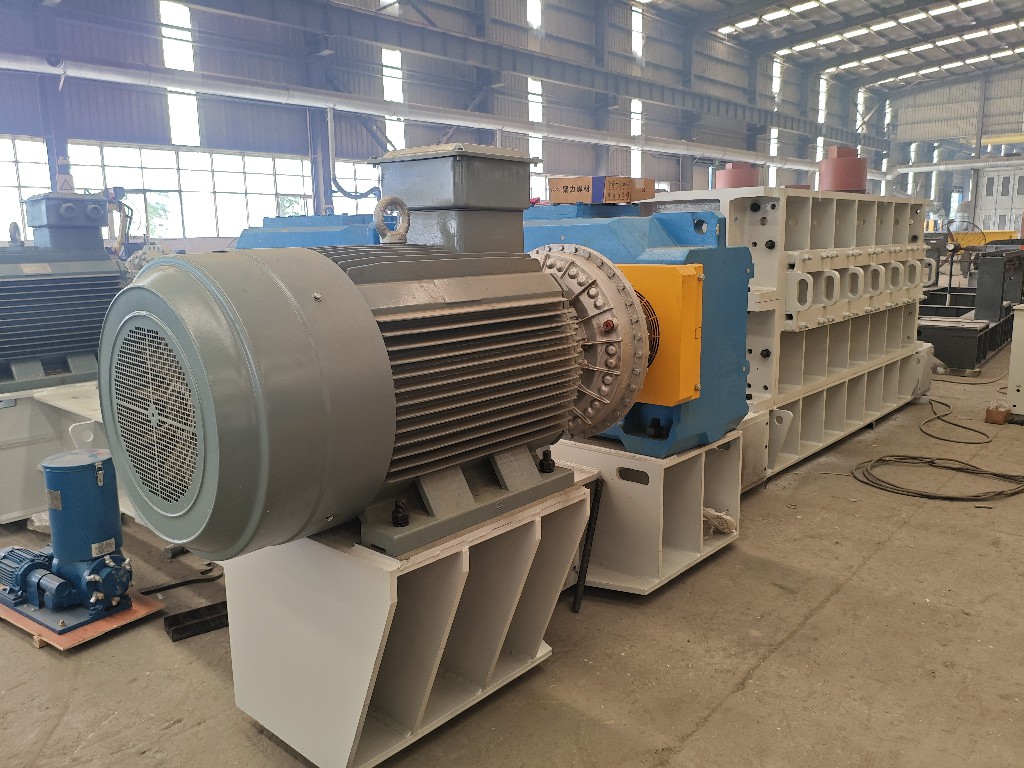
Selecting the correct Mineral Sizer is one of the most important decisions when designing or upgrading a crushing system. Many buyers focus primarily on processing capacity, assuming that a larger machine automatically delivers better performance. In reality, an oversized Mineral Sizer often results in unnecessary investment, higher power consumption, and reduced operating efficiency, while an undersized machine can create production bottlenecks and increase maintenance frequency. The ideal solution is a Mineral Sizer that is carefully matched to your material characteristics and production requirements.
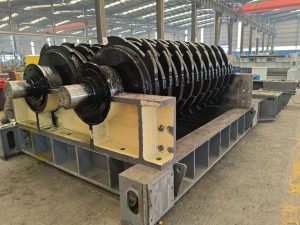
The first factor to evaluate is feed material. Different minerals behave differently during crushing. Coal, limestone, gypsum, shale, phosphate rock, and other medium-hard materials each have unique compressive strengths, moisture contents, and abrasiveness. These properties directly influence the required crushing force, tooth profile, and rotor configuration. For example, wet and sticky coal requires a different tooth arrangement than dry limestone to prevent material build-up and maintain continuous throughput.
Capacity is another key consideration. A Mineral Sizer designed for 300 TPH performs differently from one rated for 1,500 TPH, even if both produce similar output sizes. Production planning should consider not only today's demand but also future expansion. Choosing equipment with reasonable capacity reserves allows operations to increase output without replacing the entire crushing system.
Feed size and discharge size should also be analyzed together. Large lump materials require wider inlet openings, stronger shafts, and larger crushing rolls. Meanwhile, the desired product size determines tooth geometry, crushing stages, and rotational speed. An optimized Mineral Sizer can consistently produce uniform product sizes while minimizing fines, making it particularly suitable for downstream screening, conveying, and processing systems.
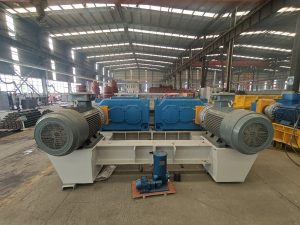
Operating conditions often receive less attention but significantly influence equipment selection. Installation space, foundation strength, ambient temperature, dust levels, and maintenance accessibility all affect long-term reliability. Underground mining operations, for instance, frequently require compact Mineral Sizers with high torque and low-profile designs, while open-pit mines may prioritize maximum throughput and simplified maintenance.
Modern Mineral Sizers also incorporate intelligent protection systems. Hydraulic overload protection, automatic tramp metal release, condition monitoring, and variable speed drives help reduce unexpected downtime and extend component life. These technologies improve operational safety while lowering total ownership costs throughout the equipment's service life.
Rather than selecting equipment solely by capacity, experienced engineers evaluate the complete process—from material characteristics and production targets to plant layout and maintenance strategy. This comprehensive approach ensures the selected Mineral Sizer delivers reliable performance, lower operating costs, and long-term value.
At Zhenyuan Technology, every Mineral Sizer solution is engineered according to the customer's actual operating conditions. By analyzing feed characteristics, required capacity, particle size distribution, and installation environment, customized crushing solutions can be developed to maximize productivity while minimizing energy consumption and maintenance costs. Proper equipment sizing is not simply about choosing a larger machine—it is about selecting the right machine for sustainable, efficient production.
Frequently Asked Questions
The correct Mineral Sizer capacity depends on hourly throughput, feed size, material hardness, moisture content, and future production plans. A complete process evaluation provides the most accurate equipment selection.
Yes. A Mineral Sizer can process coal, limestone, gypsum, oil shale, phosphate rock, and other medium-hard materials, provided the tooth design, roll configuration, and operating parameters are customized for each application.
The maximum feed size varies depending on the model. Large-capacity Mineral Sizers are capable of handling oversized lump materials while maintaining stable crushing performance and controlled product sizing.
A customized Mineral Sizer is designed according to material characteristics, production capacity, discharge requirements, and site conditions, resulting in higher efficiency, lower maintenance costs, and longer equipment life.
Mineral Sizers are widely used in coal mining, cement plants, power generation, aggregate production, limestone processing, phosphate mining, and other bulk material handling industries where controlled crushing and low fines generation are essential.