

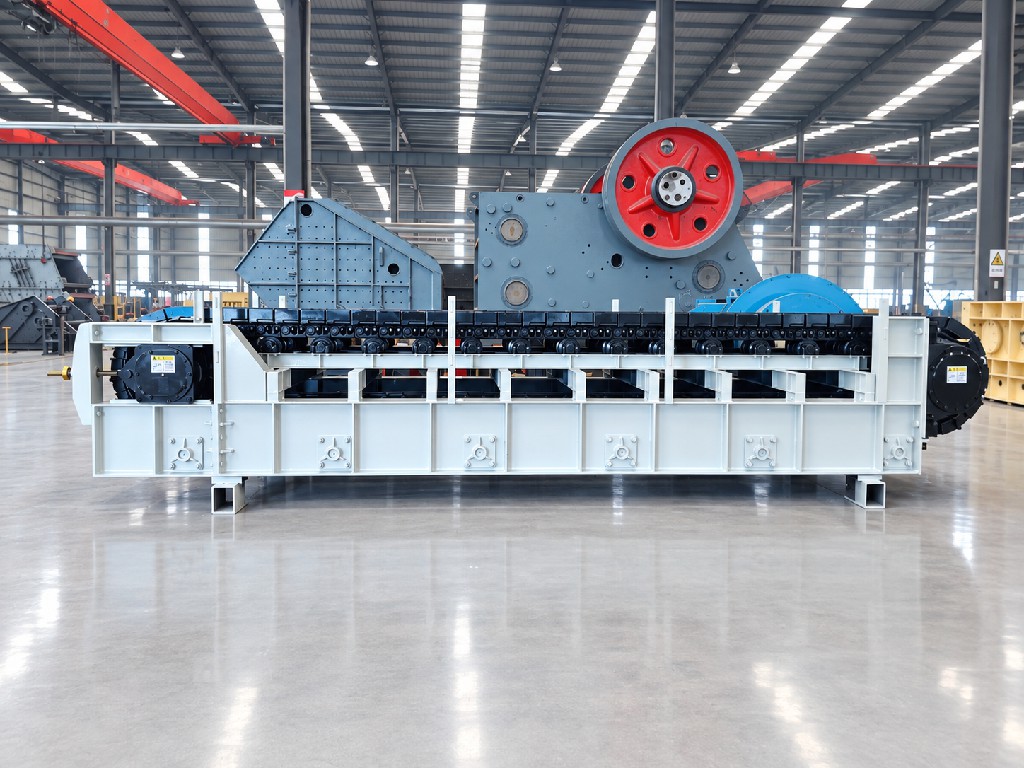
The purchase order for a heavy-duty apron feeder is only the opening chapter of its cost story. The more expensive chapter often begins months later, when a site needs a replacement pan, chain link, roller, sprocket segment, or drive component and discovers that the original quote did not reveal the price of staying operational.
That is where buyers get scalped on spare parts—not necessarily through one outrageous invoice, but through a system designed around vague part descriptions, proprietary interfaces, incomplete documentation, and urgent lead times. A mining apron feeder can operate for years in punishing service. Over that life, the difference between a transparent supply arrangement and a locked-in one can be substantial.
The good news is that this risk is manageable. It is not solved by choosing the cheapest plate feeder, and it is not solved by demanding a blanket promise that every component will be interchangeable. It is solved by defining the duty correctly, making the spare-parts basis visible before award, and documenting exactly what the supplier will support after commissioning.
This guide explains how experienced mining, coal, quarry, and bulk-material buyers source a heavy-duty apron feeder for reliable production and defensible lifecycle cost.
Why Apron Feeder Spare Parts Become So Expensive
An apron feeder works at one of the hardest points in a handling circuit: below a dump hopper, ROM bin, surge pile, or crusher feed chute. It may see direct impact, high head load, abrasive rock, wet coal, oversize lumps, or all of them at once. Its pans, chains, rollers, sprockets, bearings, drive system, and frame must be engineered as one load-bearing system.
That integration is necessary. But it can also be used to make a buyer dependent on one source when the following are missing from the original purchase package:
- A complete, itemized bill of materials (BOM) with part numbers and quantities.
- Drawings showing the critical interfaces, dimensions, and fit-up requirements.
- The material grade, heat treatment, hardening, or wear-protection specification for wear parts.
- The make, model, and service details for purchased components such as motors, reducers, bearings, couplings, and controls.
- A priced recommended-spares list and clear lead times.
When those details are absent, a part may be described only as a “feeder roller” or “chain assembly.” The buyer cannot accurately compare alternatives, stock the right item, or challenge a late price increase. During an outage, that lack of information turns into leverage for someone else.
Start with the Real Duty, Not the Catalogue Capacity
Spare-parts value begins with correct equipment selection. A feeder that is undersized, over-stressed, or mismatched to the loading arrangement will consume parts faster, however attractive its initial price may be.
Before asking any apron feeder manufacturer for a proposal, prepare a duty sheet that states the facts of the application:
- Material name, bulk density, moisture, clay or stickiness, abrasiveness, and temperature.
- Maximum lump size, typical size distribution, and fines content.
- Normal and peak capacity in tonnes per hour, plus expected operating hours.
- Feed arrangement: direct truck dumping, loader charging, bin drawdown, or stockpile reclaim.
- Hopper geometry, material head load, impact height, feeder incline, and discharge elevation.
- Downstream equipment, especially the crusher's permitted feed rate and maximum accepted lump size.
- Available maintenance space, power supply, controls philosophy, and site environmental conditions.
This information affects much more than feeder width and speed. It shapes pan profile, chain pitch, roller spacing, drive torque, structural strength, impact-zone reinforcement, and access for adjustment and replacement. A supplier that quotes solely from a nominal throughput figure is giving you a budget number, not a reliable basis for lifecycle cost.
Build Spare-Parts Transparency into the RFQ
The most effective time to control apron feeder spare-parts cost is before quotations are compared. Add a mandatory spare-parts schedule to the request for quotation (RFQ), then require every bidder to complete the same fields. Do not accept “available on request” as an answer.
For each recommended item, ask for:
| RFQ requirement | Why it matters |
|---|---|
| Assembly name, part number, drawing revision, and equipment serial-number applicability | Prevents ambiguous orders after installation. |
| Quantity per feeder and recommended stock quantity | Shows whether a quoted spare is one item or a set of several. |
| Function and wear classification | Separates true wear parts from capital spares and routine consumables. |
| Material, manufacturing route, and relevant treatment or coating | Lets technical teams assess expected wear life and compare like with like. |
| Unit price, currency, validity period, Incoterm, and packing weight | Makes later landed-cost comparisons possible. |
| Normal manufacturing lead time and expedited lead time | Reveals outage exposure before it becomes urgent. |
| Approved equivalent or original component make and model, where applicable | Reduces avoidable dependence on an unnamed proprietary component. |
Request separate pricing for commissioning spares, two years of operating spares, and critical capital spares. These are different categories. A commissioning pack covers likely installation or start-up needs. Operating spares cover predictable wear. Capital spares protect against a low-probability but high-consequence failure, such as a reducer or main drive assembly.
Know Which Heavy-Duty Apron Feeder Parts Deserve the Closest Review
Not every item needs the same level of scrutiny. Focus your technical and commercial review on the parts that determine availability, wear cost, and replacement difficulty.
Apron Feeder Pans and Fasteners
Ask for the pan material, thickness, profile, attachment method, and wear protection appropriate to the material being handled. In a high-impact ore application, the pan design and support arrangement are as important as the visible plate itself. For abrasive service, require the supplier to state the assumed material condition and the design basis for the wear solution; “heavy duty” is not a specification.
Also confirm whether pan fasteners are standard sizes or special items, whether they are supplied with replacement pans, and what access is needed to change them. A pan can be competitively priced yet costly to replace if the fixing arrangement requires extensive disassembly.
Apron Feeder Chains, Rollers, and Sprockets
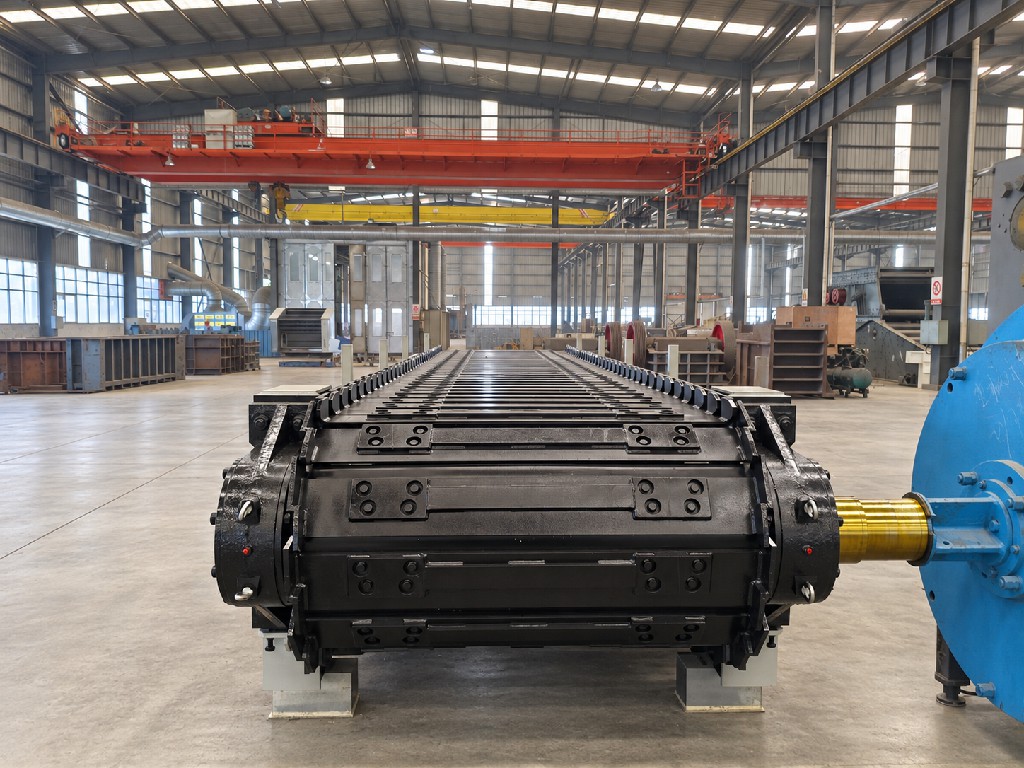
The running system is the heart of an apron feeder. Obtain chain pitch, link arrangement, attachment details, roller dimensions, bearing arrangement, lubrication method, and sprocket tooth or segment data. The goal is not to assume that another supplier's chain will fit. The goal is to make fit and performance verifiable if a second source is ever needed.
Ask the supplier to identify which components should be replaced as matched sets. For example, replacing a severely worn chain on existing worn sprockets can shorten the life of the new chain. A credible supplier will explain these relationships rather than sell individual items without context.
Drive, Reducer, Motor, and Controls
Where practical, specify recognized, supportable component brands or formally approved equivalents for the motor, reducer, bearings, variable-frequency drive, and key electrical parts. Record exact model numbers, service factors, ratios, installed power, and settings in the final documentation.
This does not mean forcing a drive design that is unsuitable for the feeder. It means avoiding an avoidable black box. If a component is custom, document its interface, torque requirement, and replacement procedure. A site should know what must be ordered, from whom, and how long it will take before the component fails.
Protect Your Position in the Purchase Contract
Technical detail only helps if it becomes a contractual deliverable. Include the following protections in the supply agreement for the heavy-duty apron feeder:
- Frozen spare-parts pricing: Lock the quoted prices, agreed adjustment method, or a capped escalation formula for a defined period. State the currency and freight basis.
- Final BOM and manuals: Make the approved BOM, operation and maintenance manual, recommended-spares list, and as-built drawings part of the handover package—not optional after-sales documents.
- Revision control: Require the supplier to notify the buyer before a part revision affects form, fit, function, interchangeability, or maintenance procedure.
- Availability commitment: Agree on normal lead times for critical parts and a process for urgent orders. Do not confuse a promise to “support” the equipment with a defined availability obligation.
- Component traceability: Require serial numbers or identification for major drive and running-system components, plus certificates or inspection records where the specification calls for them.
- Qualified alternatives: For standard bought-out components, identify approved alternatives. For custom wear parts, agree what technical information the owner needs to evaluate a qualified replacement source in the future.
The objective is fair commercial continuity, not an unreasonable demand for a supplier's entire intellectual property. A capable apron feeder manufacturer should be able to protect proprietary design know-how while still giving the owner enough identification, interface, and service information to operate responsibly.
Compare Quotes by Cost of Availability, Not Purchase Price
An inexpensive quote can become the expensive option if it has thin pans, a lightly specified running system, unpriced spares, or a long single-source lead time. Use a comparison sheet that puts the critical facts side by side.
| Evaluation area | Questions to compare |
|---|---|
| Mechanical duty | What head load, impact condition, lump size, and duty cycle has each supplier actually designed for? |
| Wear package | What are the pan, chain, roller, and sprocket specifications, expected replacement basis, and included spare quantities? |
| Service access | Can maintenance teams inspect, lubricate, adjust, and replace major wear parts within the site's shutdown window? |
| Supply security | Are part numbers, component makes, lead times, and recommended spares fully disclosed and priced? |
| Commercial protection | Is price validity, change control, warranty support, and post-warranty spare availability written into the offer? |
This approach changes the conversation. Instead of asking, “Which apron feeder is cheapest?” you are asking, “Which design gives us the most controlled tonnes over the life of the plant?” That is the question a production manager, maintenance superintendent, and procurement team can all support.
Red Flags That Suggest You May Be Locked into High Spare-Part Costs
Watch carefully when a quotation shows one or more of these signs:
- The feeder model is offered without a full duty calculation or loading assumptions.
- Critical spares are shown as a single lump-sum line with no part numbers or quantities.
- Drawings identify only general assemblies and omit serviceable components.
- The supplier will not identify makes and models of standard purchased components.
- Wear-part materials are described with marketing terms but no technical basis.
- Lead times are omitted, or every part is simply said to be “subject to confirmation.”
- The price is unusually low but the warranty, commissioning spares, and post-warranty support are vague.
Any one of these points may have a reasonable explanation. Several together deserve a direct clarification before award. The right response is not confrontation; it is a structured request for information and a documented answer.
A Practical Sourcing Sequence for Mining and Coal Projects
For a new mining apron feeder or coal apron feeder, a disciplined sequence reduces both technical and commercial surprises:
- Issue a complete duty sheet and layout information.
- Require a supplier data sheet that records the actual design assumptions.
- Evaluate the running system, drive, pans, frame, and maintenance access with the same care used for capacity.
- Obtain itemized pricing and lead times for commissioning, operating, and capital spares.
- Review the BOM and document package before the equipment leaves the factory.
- Set initial stock levels around consumption risk, site location, supplier lead time, and outage consequence—not an arbitrary percentage of purchase price.
- Keep a maintenance history from the first months of operation, then adjust the spares plan using actual wear data.
At ZhenYuan, apron feeder selection begins with the material, loading arrangement, and downstream process rather than a catalogue model alone. That same application review should carry through to the spare-parts plan: clear part identification, sensible recommended stock, serviceable design, and documentation that supports the owner after start-up.
The Bottom Line
A heavy-duty apron feeder should be a long-life foundation for a crushing or bulk-handling circuit, not a recurring source of emergency purchasing pressure. The buyer who wins is not the one who negotiates the lowest equipment price on signing day. It is the one who secures a correctly engineered feeder, an auditable spare-parts schedule, transparent component data, and contract terms that still work when the plant needs a part quickly.
That is how you buy robust feeding capacity without getting scalped later.
FAQ
For a heavy-duty apron feeder, the initial stock plan commonly considers pan and fastening sets, selected chain and roller components, sprocket segments or related running-system items, bearings, sensors, lubrication items, and critical drive spares. The final list should be based on duty severity, site access, historical wear, supplier lead time, and the production consequence of a failure—not a generic list alone.
Compare apron feeder spare parts by part number, quantity per machine, material specification, drawing revision, Incoterm, packing weight, warranty, and lead time. A low unit price is not comparable if one supplier is quoting a single roller while another is quoting a complete roller assembly with bearings and seals.
A mining apron feeder may be able to use a qualified alternative only when its dimensions, interfaces, material properties, heat treatment, load capacity, and running behavior have been verified. Never assume that parts with a similar appearance are interchangeable. Use the original technical documentation and have the replacement assessed for the actual feeder duty.
An apron feeder manufacturer should provide an approved general arrangement drawing, final BOM with part numbers, operation and maintenance manual, lubrication schedule, recommended-spares list, purchased-component make and model data, electrical drawings, and records required by the agreed specification. For major custom components, include the information needed to identify the correct replacement and verify its fit.
A coal apron feeder may face wet, sticky feed, variable lump size, and material build-up, while a plate feeder in another application may face greater abrasion or impact. The spare-parts plan must reflect actual wear mechanisms, loading method, duty cycle, and access limitations. The equipment name alone is not enough to determine stock levels.