
Choosing the right coal mine feeder equipment is essential for maintaining stable material flow, protecting downstream machines, and reducing unplanned downtime.
A feeder that is too small may restrict production. Meanwhile, one that is poorly matched to wet, sticky, or oversized coal may suffer from blockages, spillage, excessive wear, and repeated drive overloads. Therefore, the best feeder is not simply the largest model. It is the machine that matches the coal properties, required capacity, hopper conditions, installation environment, and downstream process.
This guide explains the main feeder types and the nine factors that should be evaluated before purchasing a coal feeding system.
Quick Answer: Which Coal Feeder Should You Choose?
Use this comparison as an initial guide:
| Application | Commonly Suitable Equipment |
|---|---|
| Large lumps, heavy impact, and high hopper loads | Heavy-duty apron feeder |
| Smooth transfer of relatively uniform coal | Belt feeder |
| Short-distance and controlled feeding | Vibrating feeder |
| Compact discharge beneath a coal bin | Reciprocating feeder |
| Feeding and primary crushing in one machine | Feeder breaker |
| Accurate weighing, blending, or dosing | Weigh belt feeder |
Capacity alone is not enough to make the final selection. Maximum lump size, moisture, bulk density, abrasiveness, installation angle, and starting conditions can all change the required feeder design.
What Does Coal Mine Feeder Equipment Do?
A coal feeder withdraws material from a hopper, bin, stockpile, or crusher discharge and delivers it to a conveyor, crusher, screen, or processing system at a controlled rate.
Its main functions are to:
- Start and regulate coal flow
- Prevent sudden surges and downstream overloads
- Maintain the required production rate
- Reduce blockages, spillage, and uneven equipment loading
Because the feeder often operates directly below a receiving hopper, it may need to withstand heavy material pressure, falling lumps, abrasive contaminants, and frequent starts under load.
1. Define Normal and Peak Capacity
Start by specifying three values:
- Normal operating capacity in tons per hour
- Maximum or surge capacity
- Minimum controllable feed rate
A feeder sized only for average production may become overloaded when a truck dumps suddenly or compacted material releases from the hopper. However, excessive oversizing can also cause poor low-speed control, unnecessary energy use, and higher investment costs.
To calculate coal capacity, multiply volumetric flow by bulk density. If moisture, ash, particle size, or coal source changes the density, the equipment should still handle that realistic operating range.
A variable-frequency drive can provide adjustable output, but the manufacturer should confirm the stable speed and capacity range.
2. Provide Complete Coal Characteristics
The word "coal" is not a complete material specification. Run-of-mine coal may include wet fines, clay, shale, stone, tramp metal, and occasional oversized lumps.
Provide the supplier with:
- Maximum lump size
- Typical particle-size distribution
- Loose and compacted bulk density
- Moisture and clay content
- Stickiness and flow behavior
- Abrasiveness
- Material temperature
- Expected contaminants
Wet, clay-rich coal may adhere to pans, belts, and chute walls. In addition, large lumps create impact loads, while shale and stone accelerate wear. In difficult applications, engineers should evaluate the hopper, outlet, and feeder together. After all, a larger motor cannot correct a hopper that naturally encourages bridging or ratholing.
3. Select the Correct Feeder Type
Heavy-Duty Apron Feeder
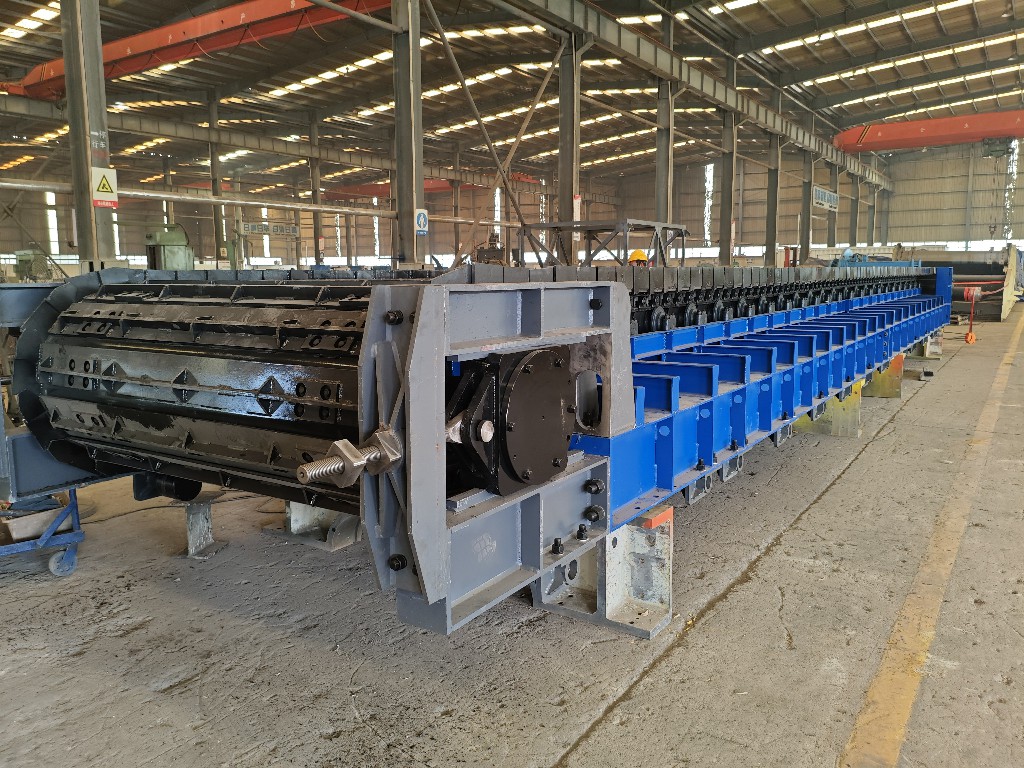
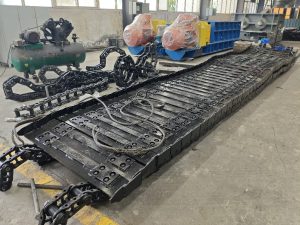
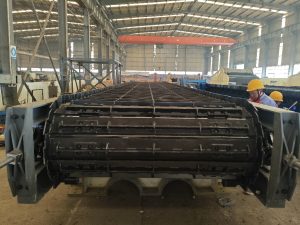
A heavy-duty apron feeder uses overlapping steel pans supported by chains and rollers. It is commonly selected for severe primary feeding duties involving large lumps, high impact, abrasive material, and heavy hopper loads.
This feeder often suits applications where trucks or loaders discharge raw coal directly and the machine must restart beneath a full hopper.
When comparing an apron feeder, check the pan construction, chain design, impact support, liners, lubrication system, and maintenance access.
Belt Feeder
A belt feeder provides smooth and continuous withdrawal. Moreover, it can offer good rate control when coal is relatively uniform and the loading zone shields the belt from severe impact and sharp oversized rock.
Important selection details include belt rating, loading-zone protection, skirt sealing, take-up design, tracking, and belt cleaning.
Vibrating Feeder
A vibrating feeder is useful for short-distance feeding and compact layouts. However, its suitability depends on the material's flow behavior. Dry coal may move freely, while wet and sticky fines can reduce feeding consistency.
In addition, engineers must design the supporting structure for the feeder's dynamic loads and vibration-isolation system.
Reciprocating Feeder
A reciprocating feeder discharges material through a controlled back-and-forth motion. As a result, it can suit compact or space-limited installations, including some underground coal handling applications.
The design should be checked for discharge pulsation, sliding wear, particle degradation, and compatibility with the receiving conveyor.
Feeder Breaker
A coal feeder breaker combines feeding and primary size reduction in one machine. It can receive run-of-mine coal, control the flow, and reduce large lumps before the material reaches a belt conveyor.
Confirm the maximum feed size, required product size, breaker configuration, installed torque, tramp-material protection, and wear-part replacement method.
Weigh Belt Feeder
A weigh belt feeder measures mass flow during operation. Therefore, mines generally use it for blending, dosing, or controlled process feeding rather than severe impact loading from large run-of-mine coal.
4. Check Hopper Load and Starting Conditions
Material depth above the outlet creates pressure on the feeder. This load affects starting torque, chain pull, belt tension, drive power, and structural strength.
In particular, the most demanding condition may occur when the feeder must restart after an emergency stop while the hopper is full.
Provide:
- Hopper outlet length and width
- Maximum coal depth
- Hopper wall angles
- Outlet geometry
- Loading method
- Starts per hour
- Requirement to start under full load
For reliable flow, the supplier should engineer the hopper, interface chute, and feeder as one system.
5. Evaluate Lump Size and Impact
Maximum lump size influences feeder width, pan or belt construction, skirt clearance, and jamming risk. Consequently, the feeder should pass the largest expected lumps without depending on ideal particle orientation.
Drop height is equally important. For example, a large coal or stone lump falling several meters may damage a feeder that could otherwise carry the same material easily.
Depending on the loading conditions, the equipment may require reinforced pans, impact rails, replaceable liners, impact beds, or a rock box. Tell the manufacturer how often oversize occurs and the approximate maximum lump weight, not only the nominal feed size.
6. Consider Wet, Dusty, and Underground Conditions
Coal handling equipment operates in abrasive dust, moisture, shock, and sometimes corrosive mine water. Furthermore, underground sites may have limited ventilation, restricted maintenance space, and specific electrical safety requirements.
Review:
- Motor and enclosure protection
- Bearing and seal design
- Dust covers and extraction points
- Drainage and washdown provisions
- Corrosion protection
- Ambient temperature and altitude
- Fire and explosion risk controls
Electrical equipment and instruments must comply with the regulations and hazardous-area classifications that apply to the mine location.
7. Examine Wear Life and Maintenance Access
Purchase price is only one part of feeder cost. Poor access can increase labor hours and extend every shutdown throughout the machine's service life.
Therefore, before approving a design, ask:
- Can the maintenance team safely replace pans, chains, rollers, liners, picks, or belts?
- Is there space to remove the motor and gearbox?
- Are inspection and lubrication points accessible?
- Which parts usually wear first?
- Are critical spare parts locally available?
- What lifting equipment does the maintenance team need?
Wear materials should match both the coal and its contaminants. Ultimately, a maintainable feeder can deliver more annual tonnage than a higher-capacity machine that takes longer to repair.
8. Specify Controls and Protection
Ideally, the feeder should work with the complete coal handling system rather than operate as an isolated machine.
Useful controls and monitoring may include:
- Variable-speed control
- Zero-speed detection
- Motor current or torque monitoring
- Belt misalignment or chain monitoring
- Blocked-chute detection
- Hopper-level signals
- Bearing temperature monitoring
- Emergency-stop circuits
- Interlocks with conveyors, crushers, and screens
For example, the feeder should stop if the receiving conveyor stops. Likewise, if a downstream mineral sizer approaches overload, the control system may slow the feeder automatically to stabilize production.
9. Compare Total Operating Cost
The lowest-priced machine is not always the most economical coal feeder.
Compare:
- Equipment and installation cost
- Civil and structural requirements
- Installed power
- Wear-part consumption
- Maintenance labor
- Spare-parts availability
- Expected downtime
- Service support
- Operating life
Also confirm the exact scope of supply. One manufacturer may include drives, guards, sensors, chutes, supports, lubrication systems, control panels, factory testing, and commissioning, while another may quote them separately.
Information to Send a Coal Feeder Manufacturer
Use this checklist when requesting a technical proposal:
- Normal, maximum, and minimum feed rates
- Maximum lump size and particle-size distribution
- Bulk density and expected variation
- Moisture, clay, abrasiveness, and contaminants
- Hopper dimensions and maximum material depth
- Loading method and drop height
- Discharge direction and downstream equipment
- Surface or underground installation
- Temperature, altitude, dust, water, and corrosion conditions
- Electrical supply and required certification
- Daily operating hours and starting frequency
- Controls and communication requirements
- Maintenance space and lifting limitations
- Required spare parts and documentation
Common Coal Feeder Selection Mistakes
Selecting by Capacity Alone
However, tons per hour without bulk density, lump size, moisture, and hopper conditions is not enough for reliable sizing.
Ignoring Worst-Case Coal
Instead, account for wet fines, clay, shale, and oversize material rather than designing only for clean, dry coal.
Overlooking the Hopper and Chutes
Even so, a well-designed feeder can perform poorly if the hopper bridges or the discharge chute restricts flow.
Forgetting Maintenance Space
Confirm how the drive, chain, belt, shaft, or breaker roll will be removed before finalizing the layout.
Frequently Asked Questions
What is the difference between a coal feeder and a feeder breaker?
A coal feeder primarily regulates and transfers material. By comparison, a feeder breaker also reduces oversized coal before discharging it to a conveyor or downstream process.
Which feeder is suitable for wet and sticky coal?
Heavy-duty apron feeders and feeder breakers are often considered for difficult run-of-mine coal. Final selection depends on moisture, clay content, lump size, hopper design, and required capacity.
When should I choose an apron feeder instead of a belt feeder?
Mines generally prefer an apron feeder for large lumps, severe impact, abrasive contaminants, and heavy hopper loads. In contrast, a belt feeder often suits smoother, more uniform, and accurately controlled feeding where the loading system prevents severe impact.
Can one feeder handle different coal types?
Yes, provided the project team defines the full range of bulk density, moisture, lump size, and capacity during selection. Although variable-speed control can adjust output, the mechanical design must still cover every planned condition.
Final Recommendation
Choosing coal mine feeder equipment should begin with actual operating conditions, not a product catalog. Define the coal characteristics, capacity range, maximum lump size, hopper load, site environment, downstream limits, and maintenance strategy before comparing models.
For severe run-of-mine duty, an apron feeder or feeder breaker may provide the required strength. In comparison, a belt or vibrating feeder may be more economical for controlled transfer of uniform coal. Where accurate process dosing matters most, a weigh belt feeder may be the right solution.
A reliable manufacturer should explain the choice of feeder width, speed, drive, structure, wear materials, and controls for your application. Therefore, supplying complete project data is the fastest route to a stable, efficient, and maintainable coal feeding system.
[CTA]
Need help selecting a feeder for your coal handling project? Send us your capacity, maximum feed size, coal characteristics, and hopper drawing for a customized equipment recommendation.