
An Apron Feeder quotation that is twice the price of another can be alarming—especially when both suppliers appear to offer the same width, length, and rated capacity. On paper, they may even look identical: “1,800 mm wide, 12 m long, 800 tph.” In a mine, coal handling plant, quarry, or crushing station, however, those headline figures tell only a small part of the story.
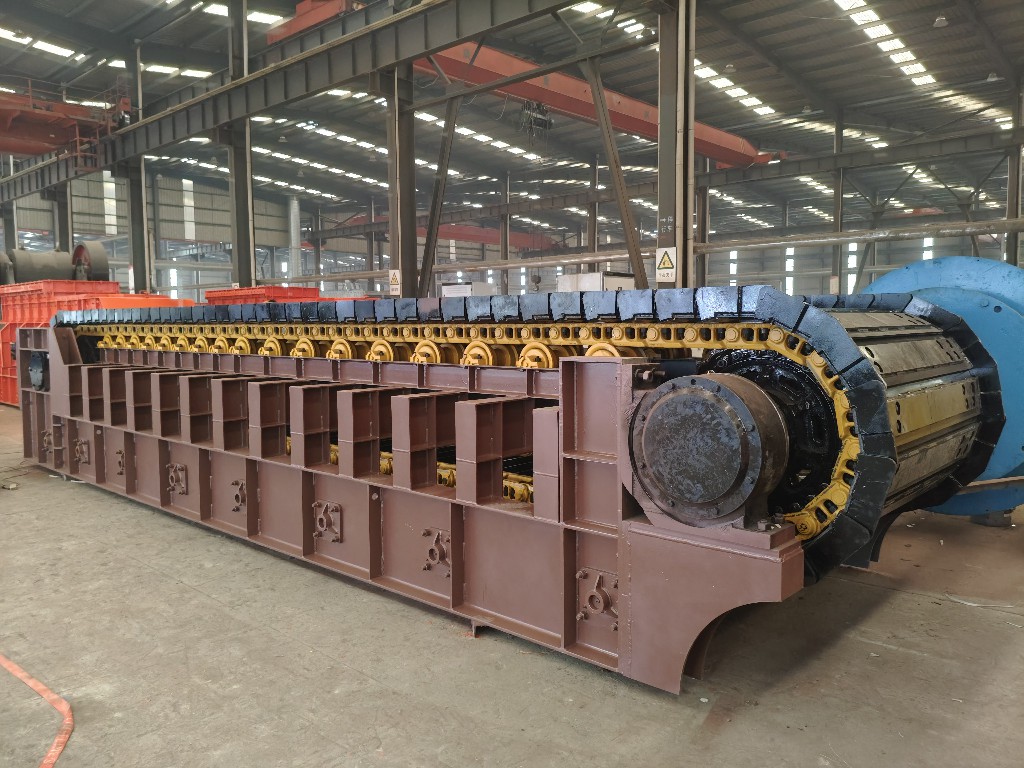
An Apron Feeder is not simply a steel conveyor with pans. It is a controlled extraction machine that must withstand impact, abrasion, uneven loading, fines leakage, and repeated starts under heavy material. The difference between a low quotation and a serious heavy-duty Apron Feeder proposal is usually hidden in the design duty, component selection, manufacturing standard, and scope of supply.
So, when an Apron Feeder price differs by a factor of two, the right question is not “Which supplier is cheaper?” It is: “What has each supplier actually designed and included?”
1. The Design Duty May Not Be the Same
The first reason for a major Apron Feeder price difference is often incomplete or unequal application data. A feeder handling dry limestone discharged from a controlled hopper is a very different machine from one extracting wet, sticky coal or abrasive iron ore from a truck-dump hopper.
A reliable supplier should ask for normal and peak capacity, maximum lump size, bulk density range, moisture, abrasiveness, material temperature, hopper geometry, discharge opening, and the expected operating hours. These are not administrative details; they determine the pulling force, chain size, pan structure, drive torque, and frame strength.
Bulk density deserves particular attention. Apron Feeders are volumetric machines: low bulk density affects the speed needed to achieve the target tonnage, while high bulk density drives the required torque and power. The hopper shear opening above the feeder can also create a substantial resistance load, particularly when the feeder must start fully loaded. Manufacturer guidance likewise identifies material properties, peak feed rate, maximum lump size, bulk density, and hopper shear length as core selection inputs.
If one quotation assumes a shallow material bed and another is designed for a fully loaded hopper with large rock impact, the prices should not be expected to match.
2. Pans, Chains, Rollers, and Frames Are Not Commodity Parts
Two Apron Feeders may have the same overall dimensions yet have dramatically different carrying structures.
The lower-priced option may use thinner fabricated pans, longer unsupported spans, smaller chain components, lightly built roller brackets, or a frame designed only for nominal conveying load. That arrangement may work in a gentle application. It becomes vulnerable when oversized material drops directly onto the feeder deck or when the hopper creates a deep, constantly loaded material bed.
A robust heavy-duty Apron Feeder normally includes reinforced pans or flights, closely supported carrying rollers or impact rails, properly overlapped pan edges, substantial chain links, and a rigid beam frame. Pan overlap is especially important where fines must be controlled; poor overlap can turn a feeder into a continuous housekeeping problem.
Material selection also matters. Wear-resistant liners, hardened sprocket segments, sealed rollers, heavy-duty bearings, and replaceable wear parts add cost before shipment—but can avoid early failures after commissioning. Established manufacturers offer both welded and cast pans, inboard or outboard chain layouts, and reinforced pan construction because the best configuration depends on the application, not simply on feeder width.
3. The Drive System Often Explains the Largest Gap
The drive is where an Apron Feeder either proves its value or reveals its weakness.
A feeder must do more than move material at normal speed. It must overcome breakaway resistance at startup, tolerate load fluctuations, maintain a controlled feed rate to the crusher, and protect the mechanical system during abnormal conditions. A quotation should therefore identify the motor rating, gearbox service factor, starting torque, variable-speed range, drive arrangement, and overload protection.
A basic fixed-speed motor and reducer may be suitable for a stable, light-duty process. A crushing plant with variable feed demand generally benefits from a variable-frequency drive (VFD), properly sized gear reducer, torque monitoring, and an appropriate control philosophy. In high-torque or demanding start-stop duties, a hydraulic drive may be specified. It offers useful operating flexibility, but it carries a higher capital cost and requires suitable maintenance capability; it is not automatically the best answer for every site.
Single-drive and twin-drive configurations also differ sharply in cost. The correct choice depends on feeder width, duty load, required torque, redundancy expectations, and plant layout. Comparing only installed motor kW is not enough. The more useful question is whether the drive can reliably start and run the feeder at the required duty without operating continuously at its limit.
4. Engineering Scope Can Be Hidden Outside the Feeder Itself
Some quotations include only the basic Apron Feeder body. Others include the items needed to install, operate, and maintain it safely.
Check whether the proposal covers inlet chute interfaces, skirtboards, sealing arrangements, discharge chute transition, drive guards, emergency pull-wire switches, maintenance platforms, access stairs, lubrication points, control panels, local control stations, and foundation load data. These items may not look exciting in a commercial comparison, yet omissions can create expensive site modifications.
The support structure is another common blind spot. A feeder experiences dead load, running load, and much higher startup load when it begins under material. The supplier and structural designer need aligned information before fabrication begins. Underestimating those loads may transfer risk and cost from the manufacturer’s quotation to the customer’s civil contractor.
5. Manufacturing Quality and Documentation Have a Real Cost
A low Apron Feeder price can reflect lower steel cost—but it can also reflect less machining, weaker welding controls, limited inspection, or minimal documentation.
For export mining equipment, buyers should clarify the steel grade, plate thickness, welding procedure, inspection level, shaft machining standard, bearing brands, gearbox manufacturer, paint system, and factory test process. A well-prepared package should also provide general arrangement drawings, foundation loads, electrical data, operating manuals, recommended spares, and a clear warranty statement.
None of these documents moves one tonne of coal or ore by itself. Yet they reduce project risk, speed up installation, and give the maintenance team the information needed to keep the Apron Feeder available for years.
6. Compare Total Ownership Cost, Not Just the Purchase Price
The cheapest Apron Feeder is not necessarily the lowest-cost feeder over its service life.
A low initial price can quickly disappear if the machine requires frequent chain adjustment, pan repair, roller replacement, unplanned shutdowns, or custom-made spare parts. Conversely, the most expensive proposal is not automatically the best value if it contains oversized features that do not serve the actual process.
The objective is fit-for-purpose design. A credible Apron Feeder manufacturer should explain why a specific chain pitch, pan thickness, drive size, roller layout, and material grade were selected. They should be willing to show the boundary between what is included, what is optional, and what depends on final site data.
When reviewing quotations, ask each supplier to complete the same comparison sheet:
- Design capacity: normal, peak, and future allowance
- Material: bulk density range, moisture, temperature, abrasiveness, and lump size
- Hopper conditions: material bed depth, shear opening, and full-load startup requirement
- Mechanical design: pan type, chain model, roller spacing, frame construction, and wear protection
- Drive package: motor, reducer, VFD or hydraulic system, torque, and protection devices
- Scope: chutes, skirts, controls, guarding, platforms, instruments, and commissioning support
- Lifecycle support: recommended spares, component interchangeability, manuals, and after-sales response
A quotation becomes comparable only after these items are aligned.
The Bottom Line
A 100% Apron Feeder price difference is rarely random. It usually reflects a difference in duty assumptions, structural strength, drive capability, included scope, or expected service life. The right feeder is not the one with the lowest number at the bottom of the quotation—it is the one engineered for the real material, real hopper, real operating cycle, and real maintenance conditions of your plant.
FAQ
An Apron Feeder uses heavy pans, chains, rollers, sprockets, and a reinforced frame to handle large, abrasive, hot, or impact-loaded material. A belt feeder is often more economical for lighter and less severe duties, but it may not tolerate the same lump size or loading conditions.
An accurate Apron Feeder quotation requires capacity, maximum lump size, bulk density range, material moisture, abrasiveness, temperature, hopper dimensions, discharge opening, operating hours, and installation layout. Missing data can lead to an under-designed or unnecessarily expensive feeder.
A VFD-driven electromechanical Apron Feeder is often a practical choice for controlled variable-speed feeding. A hydraulic drive may suit highly demanding torque or start-stop conditions, but it costs more and needs specialized maintenance. The best choice depends on the duty cycle and plant requirements.
Apron Feeder service life depends on ore characteristics, impact loading, maintenance quality, alignment, and operating conditions. Properly selected chains, rollers, sprockets, pans, and bearings can deliver many years of service, while undersized components can wear prematurely.
Compare the full technical scope rather than width, length, and capacity alone. Confirm the duty calculation, chain and pan design, drive torque, included auxiliaries, quality standards, spare parts, documentation, and warranty. This creates an apples-to-apples Apron Feeder comparison.