
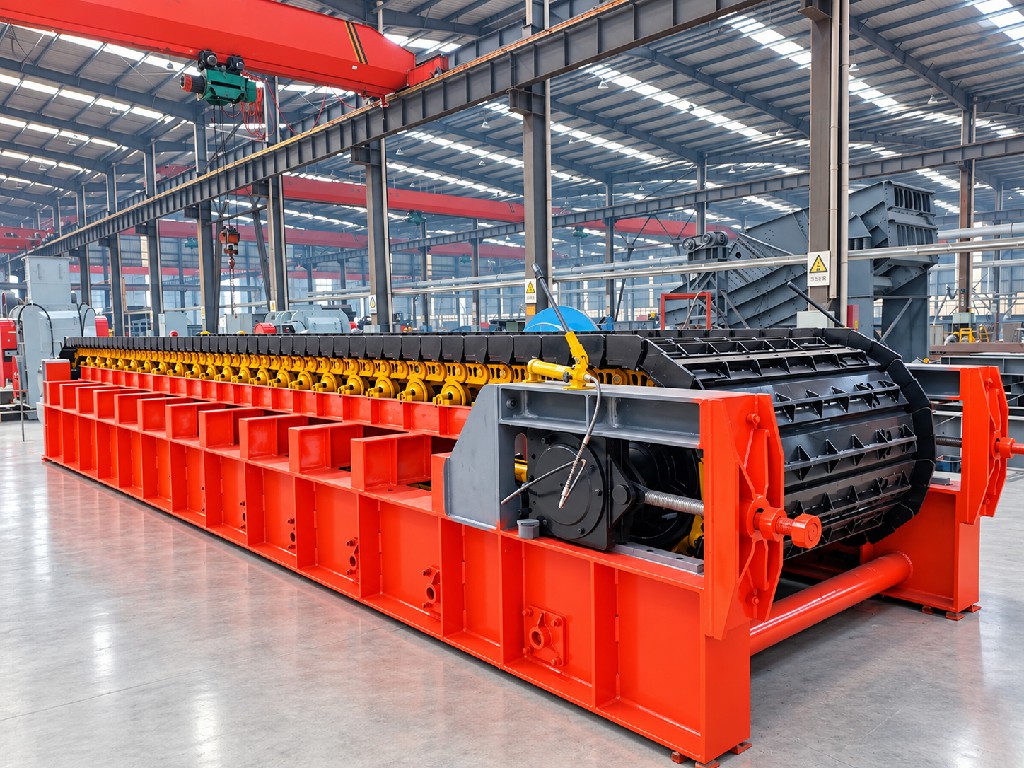
In mining, quarrying, coal preparation, and bulk material handling, an apron feeder is rarely selected as an isolated machine. It is a critical link between material receiving, crushing, conveying, and storage equipment. Its job is simple but demanding: accept heavy, abrasive, wet, sticky, or large-lump material and deliver it at a stable, controllable rate to downstream equipment.
Because apron feeders are designed for severe-duty service, they are commonly installed where ordinary belt feeders or vibrating feeders may struggle with impact loads, sharp rock, frozen coal, or high-capacity run-of-mine material. A well-designed apron feeder system does more than move material—it protects the entire production line from surges, blockages, uneven loading, and unnecessary downtime.
So, what equipment is an apron feeder usually paired with? The answer depends on the process layout, material characteristics, required capacity, and plant operating conditions. Below are the most common equipment combinations found in modern mining and coal handling plants.
1. Feed Hoppers, Dump Pockets, and Receiving Bins
The most common upstream partner for an apron feeder is a feed hopper or dump pocket. Trucks, loaders, railcar dumpers, or underground conveying systems discharge raw material into the hopper, while the apron feeder extracts it from below at a controlled rate.
This arrangement is especially common for run-of-mine ore, limestone, coal, clay, bauxite, iron ore, and other bulk solids with variable lump size. The hopper stores material temporarily, while the mining apron feeder regulates the load entering the next process stage.
A correctly designed hopper-and-feeder combination must consider hopper geometry, material flowability, maximum lump size, bulk density, moisture content, and the possibility of arching or bridging. In coal applications, sticky fines and frozen material can create flow problems. In hard-rock mining, the main concern is often impact from large blasted rock. An apron feeder’s heavy pans, chain assembly, rollers, and drive system are built to handle these demanding conditions.
2. Primary Crushers and Feeder Breakers
Apron feeders are most frequently paired with primary crushing equipment. This includes jaw crushers, gyratory crushers, primary impact crushers, double-roll crushers, and feeder breakers. The apron feeder meters large material into the crusher at a rate that matches the crusher’s actual processing capacity.
Without controlled feeding, a primary crusher can experience choking, uneven chamber loading, excessive wear, and production instability. An apron feeder creates a steady material bed and prevents sudden surges from the truck dump hopper. This is particularly important when handling large, abrasive rock or high-tonnage coal.
For coal mines, an apron feeder may discharge directly into a feeder breaker or mineral sizer. The feeder breaker reduces oversized coal and shale before the material travels to the main conveyor system. In hard-rock operations, the apron feeder commonly sends run-of-mine ore to a jaw or gyratory crusher. This controlled feed protects the crusher and improves the consistency of the crushed product. Industry guidance identifies primary crusher feed, including jaw and gyratory crusher circuits, as a core apron feeder application.
3. Grizzly Screens, Wobbler Feeders, and Scalping Screens
In many crushing plants, an apron feeder works together with a grizzly screen or scalping screen before the primary crusher. This setup allows undersized material and fines to bypass the crusher, reducing unnecessary crushing work and increasing plant efficiency.
For example, the apron feeder may discharge onto a vibrating grizzly feeder or stationary grizzly. Fine material passing through the bars is conveyed around the primary crusher, while oversized rock continues to the crusher inlet. Where material contains sticky clay, wet fines, or weathered ore, a wobbler feeder may be used instead of a conventional screen to separate fines more effectively.
This combination is valuable because it protects the crusher from receiving excessive fines while maintaining a stable feed rate. It can also reduce power consumption, liner wear, and dust generation in the crushing circuit.
4. Belt Conveyors, Transfer Chutes, and Spillage Conveyors
After the material passes through the apron feeder—or after the crusher—it is usually transferred onto belt conveyors. The apron feeder and belt conveyor pairing is one of the most important connections in a bulk material handling system.
The feeder controls the material volume, while the conveyor transports it over longer distances to screening, stockpiling, washing, blending, or further crushing stages. The transfer chute between the two machines must be engineered carefully to avoid belt damage, dust escape, segregation, and material buildup.
A spillage conveyor may also be installed beneath an apron feeder, especially when fine material can fall between the overlapping pans. This small but important conveyor collects leakage and returns it to the main material stream, keeping the working area clean and reducing manual housekeeping. In severe-duty crushing plants, complete systems may include an apron feeder, spillage conveyor, primary sizer, discharge conveyor, metal detector, and magnetic separator.
5. Secondary Crushers, Screens, and Stockpile Reclaim Systems
Apron feeders are not used only at the first stage of crushing. They are also installed below surge bins, crushed-ore stockpiles, and reclaim hoppers to feed secondary and tertiary crushing circuits.
In this application, the apron feeder extracts stored material at a consistent rate and sends it to cone crushers, impact crushers, screens, high-pressure grinding rolls, or grinding mills. The feeder acts as a buffer between material storage and process equipment, preventing sudden load fluctuations.
For coal handling plants, apron feeders can reclaim coal from bunkers or stockpiles before it enters screening, crushing, sampling, or blending systems. Their ability to handle wet and abrasive materials makes them suitable where material characteristics change seasonally or where a reliable reclaim rate is essential.
6. Dust Collection, Metal Detection, and Plant Control Systems
A complete apron feeder installation should also be paired with support equipment that improves safety and plant reliability. Dust extraction systems are often installed at hopper discharge points and transfer chutes to control airborne dust. This is especially important in coal preparation plants, underground crushing stations, and enclosed transfer buildings.
Magnetic separators and metal detectors may be mounted on downstream conveyors to remove tramp iron and protect crushers, screens, and conveyors. Variable frequency drives, speed sensors, pull-cord switches, zero-speed switches, and level sensors help integrate the apron feeder into the plant control system.
The key principle is coordination: the apron feeder should not operate independently. Its speed should respond to crusher amperage, bin level, conveyor availability, and downstream equipment status. Proper interlocking prevents overloads and allows the entire material handling line to run as one balanced system.
In summary, an apron feeder is typically paired with hoppers, crushers, screens, conveyors, stockpiles, dust-control equipment, and automated controls. The best equipment combination depends on material size, abrasiveness, moisture, capacity, and process goals. When properly engineered, an apron feeder becomes more than a heavy-duty transport machine—it becomes the flow-control foundation of a reliable mining or coal handling plant.
FAQ
An Apron Feeder is commonly paired with a jaw crusher, gyratory crusher, primary impact crusher, feeder breaker, or mineral sizer. The best choice depends on material hardness, maximum lump size, capacity, and required product size.
Yes. An Apron Feeder often discharges onto a belt conveyor, either directly or through a transfer chute. The apron feeder controls the material flow, while the belt conveyor transports material to the next process stage.
A grizzly screen removes undersized material and fines before they enter the primary crusher. This reduces crusher wear, avoids unnecessary crushing, and improves overall plant throughput.
Yes. Heavy-duty Apron Feeders are widely used with coal hoppers, feeder breakers, crushers, belt conveyors, and coal bunkers. They are particularly suitable for wet, sticky, frozen, or high-impact coal applications.
Yes. Apron Feeders are commonly installed below stockpiles, silos, bins, and reclaim hoppers. They provide a controlled and consistent discharge to secondary crushers, screens, or conveyor systems.