
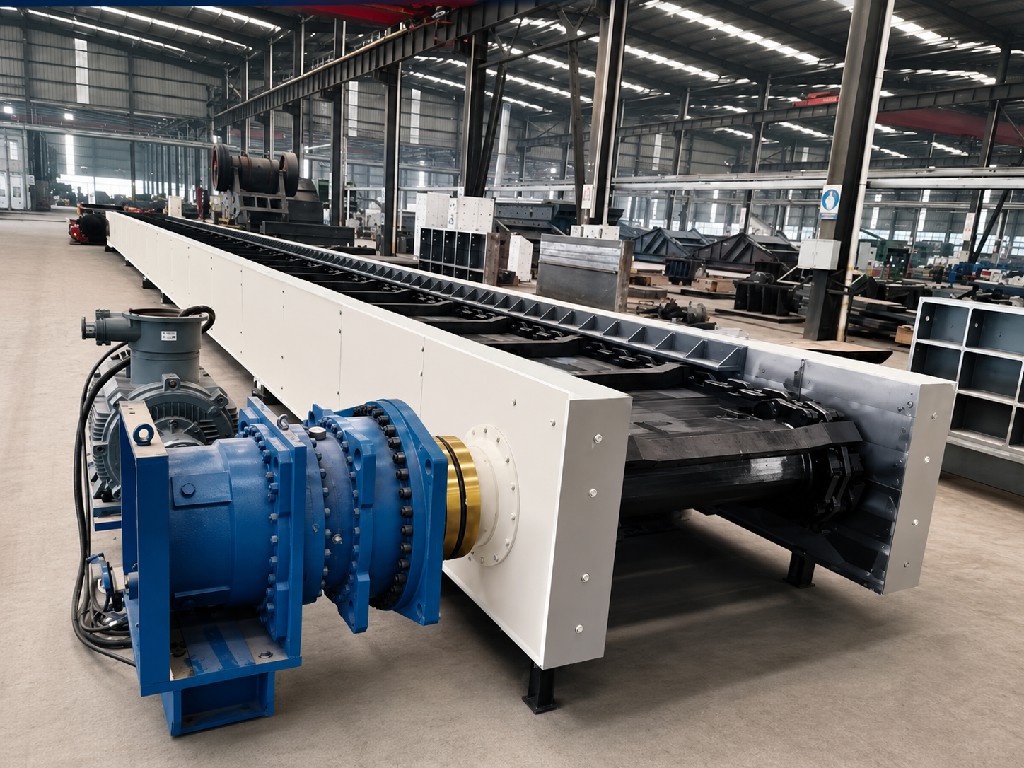
When sourcing an Apron Chain Feeder, many buyers start with one question: “How many tons per hour can it handle?”
Capacity matters, of course. But in real mining, coal handling, cement, and quarry operations, tonnage is only the surface. Two apron feeders with the same rated capacity can perform very differently once they are installed under a hopper, handling wet coal, abrasive ore, limestone, clinker, or sticky bulk material.
For procurement managers, sourcing specialists, purchasing directors, and plant owners, the smarter question is:
What parameters determine whether this Apron Chain Feeder will run reliably for years?
Below are the six key parameters that should be compared before placing an order.
Key Parameters to Compare When Buying an Apron Chain Feeder
| Parameter | Why It Matters | What Buyers Should Check |
|---|---|---|
| Material characteristics | The feeder must match the actual material, not just the capacity requirement. | Bulk density, moisture, lump size, abrasiveness, stickiness, temperature |
| Feeding capacity and speed | Capacity depends on speed, bed depth, width, and material flow behavior. | Rated t/h, adjustable speed range, effective feeder width, material layer height |
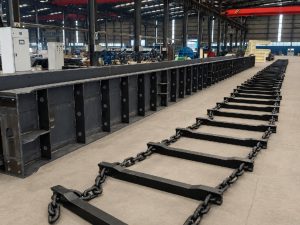
| Chain and sprocket design | The chain system carries the working load and affects service life. | Chain pitch, tensile strength, sprocket material, sealing, lubrication method |
| Pan plate and wear liner | Directly impacts durability under impact and abrasion. | Pan thickness, liner material, replaceable wear parts, impact zone reinforcement |
| Hopper pressure and installation layout | Poor layout can overload the feeder even when motor power looks sufficient. | Hopper opening size, material head load, installation angle, skirt board design |
| Drive system and maintenance access | A reliable feeder must be easy to operate, inspect, and service. | Motor power, reducer type, VFD control, take-up device, access space, spare parts availability |
1. Material Characteristics: The Starting Point of Correct Selection
A reliable Apron Chain Feeder is designed around the material it handles.
Coal, iron ore, copper ore, limestone, gypsum, clay, and clinker all behave differently. Some materials flow easily. Others bridge inside the hopper, stick to the pans, or create heavy impact loads when large lumps fall from above.
Before comparing quotations, buyers should confirm:
- Maximum lump size
- Bulk density
- Moisture content
- Material temperature
- Abrasiveness
- Stickiness
- Corrosive conditions
For example, a feeder handling dry limestone may not need the same pan thickness or wear protection as a feeder installed below a primary crusher handling sharp, high-impact ore. If the material data is unclear, the supplier’s offer may look attractive on paper but fail in operation.
2. Capacity and Speed: Rated Tonnage Is Not the Whole Story
A common mistake in procurement is comparing only the rated capacity, such as 300 t/h, 800 t/h, or 1,500 t/h.
In practice, feeding capacity is influenced by feeder width, material bed depth, chain speed, and hopper discharge behavior. A well-designed mining Apron Chain Feeder should provide stable feeding without overloading downstream crushers, screens, or conveyors.
Buyers should ask whether the feeder includes variable speed control. A VFD-controlled drive allows operators to adjust feed rate based on production demand, crusher load, or material condition. This is especially useful in coal preparation plants, aggregate lines, and ore processing systems where material flow is not always consistent.
3. Chain and Sprocket Design: The Hidden Core of Feeder Reliability
The chain system is one of the most important parts of an Apron Chain Feeder. It carries heavy loads, absorbs impact, and keeps the pans moving smoothly under demanding conditions.
When comparing suppliers, procurement teams should not only ask for “heavy-duty chain.” They should request details such as:
- Chain pitch
- Chain breaking strength
- Roller and bushing material
- Heat treatment process
- Sprocket hardness
- Lubrication and sealing design
A low-cost chain may reduce the initial purchase price, but it can increase downtime, spare parts consumption, and maintenance labor. For plants running continuously, chain failure is far more expensive than choosing a stronger chain system from the beginning.
4. Pan Plate and Wear Liner: Where Real Working Life Is Decided
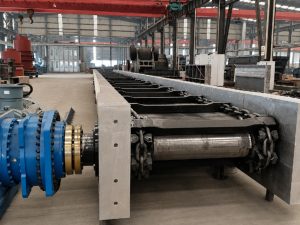
The pan plate is in direct contact with bulk material. It must withstand impact, friction, and repeated loading.
For abrasive ore or clinker, wear-resistant liners may be necessary. For large lump material, reinforced pans and impact-resistant structures should be considered. For sticky coal or clay, pan shape and discharge design become equally important.
A professional Apron Chain Feeder manufacturer should be able to recommend pan thickness and liner options according to material and operating conditions, rather than offering one standard configuration for every project.
5. Hopper Pressure and Layout: A Feeder Is Part of a System
An Apron Chain Feeder does not work alone. It is usually installed below a hopper, bin, stockpile outlet, or crusher discharge chute.
This means the feeder must handle not only the material flow but also the pressure from the material column above it. If the hopper opening is too large, the feeder may face excessive load. If the skirt board is poorly designed, material leakage and abnormal wear may occur.
Before purchasing, buyers should provide the supplier with:
- Hopper drawings
- Installation space
- Discharge height
- Required feeding direction
- Material storage height
- Downstream equipment information
This allows the supplier to calculate a more realistic drive power, frame strength, and feeder structure.
6. Drive System and Maintenance Access: Lower Cost Over the Full Life Cycle
Procurement is not only about buying equipment. It is about buying years of stable operation.
A good heavy-duty Apron Chain Feeder should be easy to inspect, adjust, and maintain. The drive system should match the load condition, and maintenance points should be accessible without unnecessary shutdown time.
Important details include:
- Motor and reducer brand options
- VFD compatibility
- Torque protection
- Chain tensioning device
- Bearing arrangement
- Guarding and safety design
- Spare parts supply
For overseas buyers, spare parts availability is especially important. A feeder with standard, well-documented components can reduce long-term maintenance risk and make purchasing easier for the plant team.
Final Procurement Advice
If you are sourcing an Apron Chain Feeder, do not compare suppliers by tonnage and price alone. The real value is in the engineering details: material compatibility, chain strength, pan durability, hopper load calculation, drive configuration, and maintenance convenience.
A reliable feeder keeps material moving. A poorly selected feeder creates production bottlenecks, unexpected shutdowns, and rising operating costs.
For procurement teams, the best decision is not always the lowest quotation. It is the feeder that matches the working condition, protects the production line, and delivers a lower total cost over its service life.
FAQ
An Apron Chain Feeder is used to continuously feed heavy, abrasive, or large lump bulk materials from hoppers, bins, crushers, or stockpiles to downstream equipment such as crushers, screens, and conveyors.
To choose the right Apron Chain Feeder capacity, buyers should consider required tons per hour, material bulk density, lump size, feeder width, bed depth, chain speed, and downstream equipment capacity.
The chain system carries the main load of the Apron Chain Feeder. Strong chain design improves reliability, reduces abnormal wear, and helps prevent costly downtime in mining and heavy-duty applications.
An Apron Chain Feeder can handle coal, limestone, iron ore, copper ore, gypsum, clinker, aggregates, and other bulk materials, especially where impact resistance and steady feeding are required.
Procurement teams should compare Apron Chain Feeder suppliers by engineering design, material suitability, chain and pan quality, drive system, maintenance access, spare parts support, delivery time, and project experience.